
AISI 4140 Alloy Steel (Chromoly)
The versatile industrial workhorse. High fatigue strength, excellent toughness, and impact resistance for heavy-duty shafts, gears, and tooling.
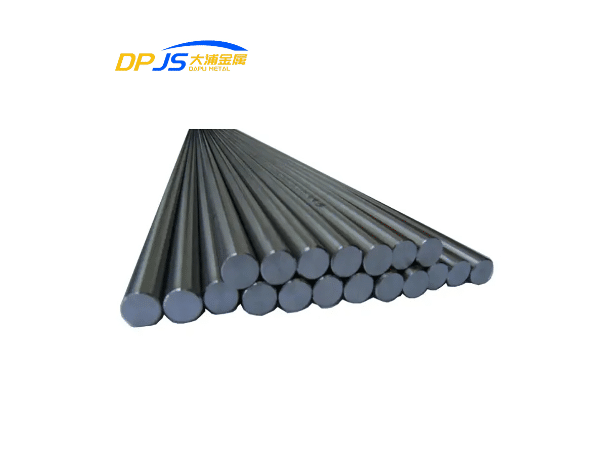
Select Your Condition
The supply condition determines your machining speed and whether post-machining heat treatment is required.
Annealed
Soft condition. Best for extensive material removal or complex geometries.
- Easiest to machine & drill.
- Lower material cost.
- Must be heat treated after machining.
- Risk of distortion during heat treat.
Pre-Hardened (QT)
Quenched & Tempered. Ready to use immediately after machining.
- No further heat treatment needed.
- Zero distortion issues (part stays straight).
- Harder to machine (slower feeds).
- Slightly higher material cost.
Machinist's Tip
Most customers choose Pre-Hardened (QT). While it eats tooling slightly faster, avoiding the headache and cost of sending parts out for heat treatment (and risking warping) makes it the most economical choice for shafts.
The "Chromoly" Advantage
Engineered chemistry that delivers superior toughness and fatigue strength compared to standard carbon steels.
Tensile Strength
ASTM A29 StandardMachinability
Chemical Composition (AISI 4140)
The addition of Chromium adds hardness and corrosion resistance, while Molybdenum allows the steel to be hardened deeply and uniformly (Through-Hardening), making it tougher than standard carbon steel.
Powered by 4140
Chosen by engineers for components that cannot fail under high stress and impact loads.

Shafts & Axles
Ideal for motor shafts, hydraulic rods, and spindles. The molybdenum content provides excellent torsional strength and fatigue resistance.

Gears & Sprockets
Used for medium-sized gears where 1045 carbon steel would be too brittle. 4140 absorbs shock loads without cracking.

High-Strength Bolts
The standard material for ASTM A193 Grade B7 bolts and studs used in high-pressure piping and structural anchors.

Oil & Gas Tools
Drill collars, subs, and downhole tools rely on 4140's ability to be hardened deeply, even in thick cross-sections.
Available Forms & Finishes
From rough black bar for heavy machining to precision ground shafts ready for installation.
Round Bar
Black oxide surface. Oversized dimensions for machining down. Lowest cost.
Scale-free, shiny grey finish. Tighter tolerance. Improved mechanical properties.
Turned, Ground & Polished. Mirror finish. Tolerance: -0.0005". Shaft quality.
Plate & Block
Standard condition for tooling plates and molds. Ready for heavy milling.
Decarb Free (DCF) finish. Oversized for finishing. Hardness ~30 HRC.
Seamless Tubing
Cost-effective for making hollow parts (sleeves, bushings) to save drilling time.
Better OD/ID concentricity and surface finish. Higher strength than HFS.
Quick Guide: Choosing the Right Finish
Hot Rolled (HR)
Choose if you plan to machine all surfaces heavily. Cheapest option.
Cold Drawn (CD)
Choose if you need a good surface finish and strength, but don't need "bearing fit" precision.
TGP (Precision)
Choose for shafts. The OD is already finished to size. Do not machine the OD.
How does 4140 Compare?
Choosing the right steel balances cost, strength, and machining time.
| Property | 1045 Carbon | 4140 Alloy (Hero) | 4340 Alloy |
|---|---|---|---|
| Tensile Strength | Medium | High (Very Good) | Extreme |
| Toughness | Low | Excellent | Superior |
| Through Hardening | Poor (Surface only) | Deep Hardening | Deepest |
| Machinability | |||
| Relative Cost | |||
| Weldability | Fair | Good (w/ Pre-heat) | Difficult |
Machinability Rating
Based on AISI B1112 Free Machining Steel = 100%.
The Verdict:
Use 1045 for simple, low-stress parts to save money.
Use 4140 for shafts and gears that experience shock loads. The extra cost is negligible compared to the risk of part failure.
Technical FAQ
Common questions from machinists and fabricators regarding 4140 steel.
Does 4140 steel rust?
Yes. AISI 4140 is an alloy steel, not a stainless steel. It contains only ~1% chromium, which is not enough to prevent corrosion. Parts must be kept oiled, painted, or plated (e.g., zinc, chrome, or black oxide) to prevent rust in service.
Can I weld 4140 steel?
Yes, but it is considered "difficult" to weld compared to mild steel. Because of its high carbon and alloy content, 4140 is prone to cracking in the Heat Affected Zone (HAZ) if not properly pre-heated. See the welding guide below.
What happens if I don't heat treat "Annealed" 4140?
If you use 4140 in its Annealed state without heat treatment, you are essentially paying extra for alloy steel but getting the performance of cheap mild steel (approx 20 HRC). To get the benefit of 4140's strength, you must Heat Treat (Quench & Temper) it, or simply buy "Pre-Hardened" stock.
What do terms like "4140HT" and "4140PH" mean?
These are industry abbreviations. HT stands for "Heat Treated" and PH stands for "Pre-Hardened." Both refer to the same condition: steel that has been quenched and tempered to 28-32 HRC at the mill.
Pro Tip: Preventing Weld Cracks
Welding 4140 without precautions will almost certainly lead to cracking. Follow these general rules:
- Pre-Heat: Heat the part to 400°F - 600°F (200°C - 315°C) before welding.
- Filler Material: Use low-hydrogen electrodes like E7018.
- Slow Cool: Do not quench. Allow the part to cool slowly in still air or sand.
- Post-Heat: Stress relieve after welding if possible.