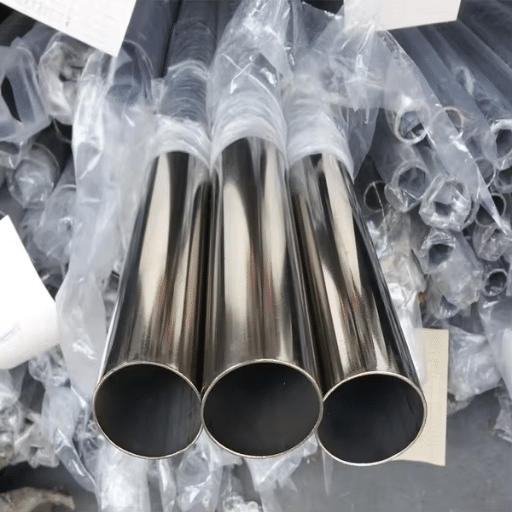
The worldwide market for stainless steel pipes experiences continuous growth because of their applications in construction projects, oil and gas operations, transportation systems, and manufacturing facilities. This comprehensive guide explains how stainless steel pipe importers function in their two main duties: providing essential materials while meeting high-quality requirements.
Understanding Stainless Steel Pipes

Types of Stainless Steel Pipes
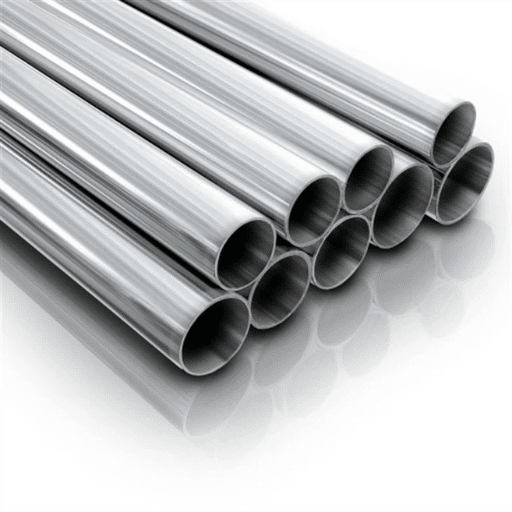
Stainless steel pipes come in various types which match different needs and work environments of various fields. Understanding these types helps businesses choose the best piping solution for their required tasks:
Applications of Stainless Steel Tubing
Stainless steel tubing serves as an essential material which various industries utilize because of its flexible applications. The material serves as the best option for vital functions because it maintains durability while resisting corrosion and enduring extreme pressure conditions.
Medical Industry
Medical devices, surgical tools, and implants use stainless steel tubing because it delivers biocompatibility and protection against contamination. This material enables catheters and precision instruments to function properly.
Automotive Sector
Automotive manufacturers use stainless steel tubing for exhaust systems, fuel lines, and structural support, as it offers strength and heat resistance under demanding conditions.
Food and Beverage Industry
Stainless steel works best for transporting liquids and gases and food materials because its hygienic properties and corrosion resistance make it suitable for this purpose. Processing plants and breweries and dairies use tubes as common equipment.
Oil and Gas Industry
The oil and gas industry depends on stainless steel tubing because it serves their needs for oil and gas exploration and their operations to move oil and gas. The material needs to maintain operational performance during conditions that involve both extreme temperatures and highly corrosive environments.
Aerospace Applications
Aerospace applications require stainless steel tubes because they provide essential strength and lightweight properties which engineers need to construct hydraulic systems and fuel lines and aircraft structural components.
Construction
Architects use stainless steel tubing for architectural purposes because it enhances aesthetic value while providing permanent strength to their structural frameworks and supporting elements and design features.
Power Generation
Power plants extensively use stainless steel tubes in their systems which include heat exchangers, boilers, and turbines because these tubes can endure high temperature and pressure conditions.
Benefits of Using Stainless Steel Pipe Products
Stainless steel pipe products provide numerous advantages which make them the preferred option for different industries and applications:
Core Advantages:
- ✓ Exceptional Corrosion Protection: Extended lifespan in extreme conditions including marine environments and chemical processing plants
- ✓ High Strength-to-Weight Ratio: Strong performance during high pressure and temperature fluctuations
- ✓ Environmental Sustainability: 100% recyclable, aligning with global waste reduction efforts
- ✓ Non-Reactive Surface: Improved hygiene for food processing and pharmaceutical industries
- ✓ Aesthetic Value: Polished finishes for contemporary building designs
Identifying Reliable Stainless Steel Pipe Suppliers

Key Criteria for Evaluating Pipe Suppliers
The process of choosing a dependable stainless steel pipe supplier requires businesses to identify essential factors which guarantee product quality and trustworthy service. Research indicates that buyers use supplier certifications together with ISO 9001 compliance as their primary method for evaluating suppliers.
The pipes operate according to essential performance standards because they underwent testing through established procedures. The supplier needs to demonstrate consistent product delivery performance because product delivery times without complications directly affect project completion dates.
Essential Evaluation Checklist:
- Certifications and Compliance: Verify ISO 9001 certification and adherence to international quality management standards
- Product Range: Assess availability of various grades, sizes, and finishes to match specific project requirements
- Delivery Performance: Evaluate track record for on-time delivery and supply chain reliability
- Technology Investment: Consider suppliers with advanced polishing techniques or custom fabrication capabilities
- Price Transparency: Ensure competitive pricing with complete cost documentation
- Customer References: Review testimonials and past performance indicators
The Role of Certifications in Importer Reliability
The assessment of importer reliability relies on certification because it delivers specific evidence which verifies product quality and compliance with regulations and ethical business standards. The latest data shows that ISO 9001 and CE marking certification provide customers with confidence because they show that an importer follows international product safety and quality management standards.
Key Insight: The certifications establish product compliance with regulatory standards while showing that an importer maintains continuous improvement processes and operational accountability. Importers use certifications to create trust with their business contacts because the certifications confirm their operational integrity.
The use of certified importers enables businesses to build more reliable supply chains while decreasing operational risks.
Importance of Supplier Inventory and Stock Levels
The operational success of every business depends on accurate maintenance of supplier inventory and stock levels. Businesses use effective stock management to maintain continuous customer service which results in higher customer satisfaction and fewer lost sales opportunities.
The latest data shows that businesses increasingly seek predictive inventory management solutions which help them maintain proper inventory levels by preventing both overstocking and stock shortages. The combination of inventory tracking and strong supplier-business communication enables companies to maintain their warehouse operations without interruptions.
Market Trends and Forecasts in the Stainless Steel Industry

Current Trends in Stainless Steel Pricing
The pricing of stainless steel has experienced substantial price changes during recent months because global economic conditions and the availability of raw materials and industrial demand patterns have driven these shifts. The production costs of stainless steel operations experience ongoing changes because nickel prices which are vital to the process experience continuous fluctuations.
Factors Driving Price Fluctuations:
- Nickel price volatility affects production costs
- Geopolitical tensions create supply chain disruptions
- Shipping delays create transportation bottleneck problems
- The construction automotive and renewable energy sectors create growing demand
- People now search for cost-efficient ways to acquire their needed materials more than ever before
Impact of Global Supply Chain Challenges
The global supply chain disruptions present major difficulties for worldwide industries, including the challenges faced by the stainless steel market. The combination of labor shortages and transportation bottlenecks and changes in customer demand has created unpredictable conditions for both supply and pricing.
| Challenge Category | Impact on Operations | Recommended Solutions |
|---|---|---|
| Material Delays | Increased costs, production schedule disruptions | Digital tracking tools, real-time monitoring systems |
| Labor Shortages | Reduced production capacity, delivery delays | Automation investments, workforce development |
| Demand Volatility | Pricing fluctuations, inventory management issues | Resilient supply chain systems, comprehensive transparency |
Future Outlook for Stainless Steel Pipe Demand
The demand for stainless steel pipes will experience continuous growth during upcoming years because multiple industries, including construction, automotive, energy, and manufacturing, implement advancements to their operations. Recent search trend data shows that people now prefer stainless steel products because manufacturers today choose materials that provide both durability and corrosion resistance.
The global focus on sustainable infrastructure development leads to this trend, which requires stainless steel because of its ability to be recycled and its long-term performance qualities. Renewable energy projects drive up the need for stainless steel pipes because solar and wind farms require both structural supports and fluid transport systems.
Building Successful Partnerships with Suppliers

Effective Communication Strategies with Suppliers
Suppliers need effective communication because it establishes reliable partnerships which enable operational efficiency. The combination of transparent communication with analytical business insights boosts organizational teamwork.
The first step of our approach requires us to apply current trend analysis tools to identify market trends and track demand fluctuations. Suppliers will achieve better production alignment when businesses share supply chain insights which includes demand forecasting information.
Communication Best Practices:
- Implement frequent updates and documented expectations
- Share demand forecasting and supply chain insights transparently
- Communicate transparently about potential issues before they escalate
- Use data-driven insights to inform both parties about market changes
- Maintain ongoing dialogue to achieve shared objectives
Negotiation Tips for Competitive Pricing
The use of data-driven insights during negotiations provides strong support for achieving competitive pricing through business negotiation processes. The latest search engine data should be used to analyze market dynamics through researching customer demand patterns and their purchasing behavior.
Data-Driven Negotiation Approach:
- Present search data showing increased product interest to negotiate volume discounts
- Use decreased demand data to negotiate flexible terms preventing overstocking
- Combine real-time data with market trend understanding for compelling arguments
- Create win-win agreements while maintaining reasonable expenses
Logistics and Sourcing Challenges
The combination of search engine data and logistics and sourcing strategies enables organizations to obtain useful information which helps them solve their operational problems. Businesses can forecast consumer demand changes through identification of popular search terms that relate to their products because these terms help them to adjust their procurement schedule.
The data-driven method helps businesses determine their inventory requirements while they optimize shipping routes and decrease waste. Companies use their understanding of regional search differences to create balanced supply chains which help them distribute resources effectively between different markets.
Environmental Considerations in Stainless Steel Pipe Importation

Corrosion Resistance and Sustainability
The outstanding corrosion resistance properties of stainless steel pipes make them an essential material whose strength enables them to withstand extreme operational environments. The material generates environmental benefits because it requires fewer replacement needs throughout its lifespan.
Sustainable Production Methods:
- Material recycling during production processes
- Adoption of energy-saving manufacturing methods
- Decreased environmental harm through extended product lifespan
- Fulfillment of sustainable supply chain requirements
Recycling and Lifecycle of Stainless Steel Products
Stainless steel stands as one of the world’s most recycled materials because it achieves a remarkable recycling rate of about 85 percent. The material demonstrates excellent recyclability because it maintains its original properties throughout multiple recycling processes, which makes it an environmentally friendly material for global industrial use.
Comparing Environmental Impact of Stainless Steel vs Other Materials
When comparing stainless steel to aluminum, plastic, and carbon steel, researchers find that stainless steel shows better environmental results than these common materials:
| Material | Recycling Rate | Environmental Challenges | Sustainability Rating |
|---|---|---|---|
| Stainless Steel | ~85% | Minimal—efficient recycling, long lifespan | Excellent |
| Aluminum | Moderate | High production energy, greater carbon emissions | Good |
| Plastic | <10% | Petroleum-based, difficult to recycle, major environmental concerns | Poor |
| Carbon Steel | Moderate | Requires protective coatings, corrosion issues increase environmental impact | Fair |
Frequently Asked Questions
What are the essential factors to consider when selecting a supplier for stainless steel pipe products?
When selecting a stainless steel pipe supplier, assess their inventory capabilities by checking their stock of welded and seamless pipes together with their inventory of specific metal grades which includes 304, 316, 316L, and 2205 duplex. The company needs to display third-party inspection and certification, which confirms their product quality and meets all necessary specifications for their pipe and tube products. The company needs to show the availability of fittings and flanges together with pipe fittings and tubing products, which will help reduce the need to source fittings and accessories from different vendors. You should inquire about the range of wall thicknesses and outer diameter (OD) options and NPS sizes which will help you meet your design specifications.
What are the distinct application requirements that determine the use of seamless or welded stainless pipe types?
The manufacturing process, which creates seamless and welded stainless materials through different methods, produces two pipe types that have different mechanical properties. Seamless pipes, which manufacturers create by drawing solid billets, become the preferred choice for high-pressure critical applications because they offer better performance than welded stainless pipes, which manufacturers produce in larger diameter sizes. The chemical and marine environments require 316, 316L, and duplex 2205 alloys for their corrosion-resistant properties while 304 and 304L provide suitable materials for sanitary and structural applications.
Do leading distributors of stainless steel tubing provide custom manufacturing services for fittings and flanges?
The main distributor of stainless steel tubing supplies an extensive selection of piping components which includes fittings and flanges and also provides custom manufacturing services to develop specialized fittings that meet specific project requirements. The distributors stock stainless steel tubing which includes rectangular tubing and OD-specific tubing and they offer pipe fittings that match your pipe and tube components. The company should provide guidance on selecting alloys which includes 304 316 and duplex materials that include 2205 and low carbon variants 304L and 316L because those alloys provide weldability and corrosion resistance.
What are the advantages of choosing 304 vs 316 stainless steel pipe and tubing?
The properties of 304 stainless steel make it a preferred material for different industries because it offers protection against general corrosion while maintaining its ability to be shaped and machined. Molybdenum in 316 and 316L materials provides resistance against chlorides and pitting which enables their use in marine environments chemical environments and areas with high corrosion rates. The low carbon versions 304L and 316L optimize welding processes by minimizing sensitization and enhancing the integrity of welded stainless steel installations.
How do I verify wall thickness and OD for pipe fittings and flange compatibility?
The verification process requires you to check wall thickness along with outside diameter (OD) against the specified NPS or OD schedule to determine whether pipe fittings and flanges will fit correctly while meeting pressure requirements. Suppliers must deliver all necessary information which includes dimensional data and tolerances together with catalogs that display available wall thicknesses and OD dimensions for both pipe and tubing products. The verification process requires you to check whether the pipe meets standard specification levels for welded and seamless materials while identifying any deviations that third-party inspection has documented.
Do stainless pipe importers stock duplex and austenitic alloys for use in demanding environments?
The majority of stainless pipe importers and distributors maintain austenitic grades 304 and 316 together with duplex alloys 2205 which have higher strength and corrosion resistance for use in challenging environments. The superior chloride stress-corrosion cracking resistance of duplex alloys enables manufacturers to achieve higher yield strength than standard austenitic stainless, which allows them to use thinner walls while maintaining the same pressure rating. High quality specialty product importers maintain a comprehensive inventory that includes both seamless and welded products, which consists of tubing and pipe fittings.