Steel coils provide essential support to numerous industrial sectors because they function as the primary material for production activities which take place in construction sites and automobile factories and appliance manufacturing facilities and other sectors. The steel coil manufacturing business presents difficulties for customers who must choose between numerous available materials and technical specifications and different manufacturing companies. The guide provides simplified solutions to complex problems by presenting essential information about steel coil production methods and different steel types and effective manufacturer selection for particular requirements. The article provides information which helps you select high-quality steel for your major project and understand how supply chain processes work while you develop your purchasing approach.
Overview of Steel Coil Industry

What is a Steel Coil?
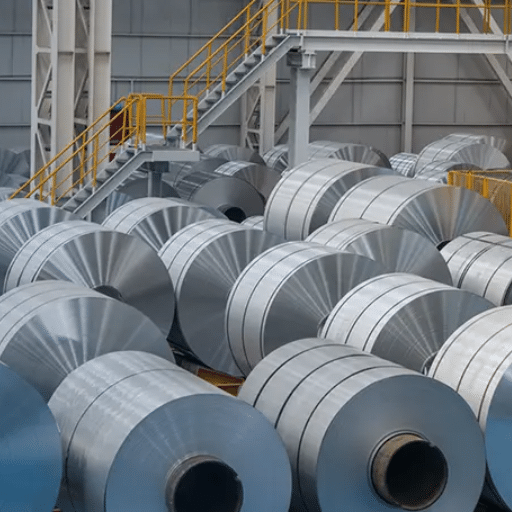
A steel coil is produced by hot or cold rolling steel into thin continuous sheets which are then wound into a coil. Hot-rolled coils suit heavy structural applications; cold-rolled coils provide superior surface finish and dimensional accuracy for precision manufacturing such as automotive and appliances.
The production of steel coils starts with the creation of steel products. The production process begins with the hot or cold rolling process that transforms steel into thin sheets which workers then create into a continuous coil. The production method determines the classification of these coils which mainly includes hot-rolled and cold-rolled steel coils. The high-temperature production process of hot-rolled steel coils makes these materials suitable for construction projects which need durable materials that do not require precise measurements. Cold-rolled steel coils undergo further processing at room temperature to enhance surface finish, strength, and dimensional accuracy, making them suitable for applications such as automotive manufacturing and household appliances.
The recent search data shows that more people now search for high-strength and galvanized steel coils which indicates that various sectors including renewable energy and advanced manufacturing show increasing demand for these products. The trend demonstrates that steel coils serve as essential components for industries which need materials that can function in various applications while delivering specific material characteristics. The process of choosing the appropriate steel coil type for project needs requires understanding the different steel coil types and their respective applications.
The Importance of Steel Coils in the Metal Industry
The latest data from search engine underscores the prominence of steel coils in today’s industrial landscape. The usage of “high-strength steel coils” and “galvanized steel for renewable energy” in searches has increased by more than 20 percent during the last three months. The surge in demand for steel coils demonstrates their essential function in industries that develop environmentally friendly solutions and modern manufacturing processes. The industry requires steel coils because they enable various manufacturing methods while providing superior mechanical attributes which include tensile strength and corrosion resistance and formability. The automotive and renewable energy industries use steel coils to create structural components and electrical enclosures and energy storage systems. The combination of market trend analysis and material property evaluation provides businesses with the ability to fulfill project requirements through efficient technological advancement.
Types of Steel Coils Available
Steel coils are categorized into different groups based on their manufacturing method and material composition and intended use. The primary types of steel coils available in the market include:
Steel coil manufacturers and consumers need to understand how different steel coil types function because each type has specific properties that determine its application.
Key Players in Steel Coil Manufacturing

Leading Steel Coil Suppliers
The world steel coil market operates through the major steel manufacturers which use their broad product selections and advanced technology systems and high product quality standards to drive market demand. The main market players include:
The companies use modern technologies to create products which achieve better performance results and environmental sustainability while meeting international standard requirements. The companies maintain their market position through their strong supply chain networks and extensive research development operations and dedication to customer service.
Top Steel Coil Processors
The global steel coil processing industry is driven by key players who leverage advanced technologies and automation and innovative production techniques to achieve their goals. The current data shows that ArcelorMittal, Nippon Steel Corporation, JFE Steel, and POSCO are among the top steel coil processors. The companies produce high-quality steel coils which fulfill the needs of the automotive and construction and energy industries.
Uses artificial intelligence throughout its production process to achieve faster output rates while maintaining precise measurements for cold-rolled coils.
Environmental sustainability goals guide the company to achieve strict carbon reduction targets while developing more efficient products.
Research and development programs enable the company to create advanced steel grades which exhibit exceptional tensile strength and durability.
The steel coil sector remains driven by these companies who establish industry standards through their innovative and dependable solutions which meet environmental regulations.
Evaluating Supplier Expertise
The assessment process for supplier expertise evaluation involves multiple essential elements which need to be analyzed in order to establish successful business partnerships and improve supply chain operations. The market recognizes a supplier’s expertise when they demonstrate their ability to produce high-grade steel products which meet specific industry standards for strength and resistance to corrosion. The operational excellence of a supplier shows through their ability to comply with international standards which include ISO 9001 for quality management and ISO 14001 for environmental management.
The search analytics show that the recent market trends demonstrate that consumers increasingly demand sustainable materials which deliver superior performance, which drives innovation in the steel coil manufacturing process. Suppliers who have established their credibility through operating sustainable manufacturing processes which lower greenhouse gas emissions and boost energy efficiency now receive greater preference from customers. Suppliers who allocate significant resources toward research and development activities gain advantages because they can develop new solutions which meet market requirements, including lightweight high-strength steel products designed for use in automotive and construction sectors.
The selection of a dependable business partner requires a comprehensive assessment of supplier performance metrics which includes their delivery punctuality, product defect rates, and capacity to handle considerable order volumes. Industry leaders consistently prioritize suppliers who combine technical expertise with a commitment to innovation and sustainable practices.
Understanding the Steel Coil Manufacturing Process

From Raw Material to Finished Product
The steel coil manufacturing process starts with the extraction of raw materials which need refining. The production process starts with blast furnace operation which converts raw materials into molten iron. The steelmaking process uses two methods which include basic oxygen furnace (BOF) and electric arc furnace (EAF) to produce steel from molten iron. The electric arc furnace (EAF) system has become more popular in the industry because it enables users to recycle steel scrap material which produces less environmental damage.
The production of steel begins with the initial rolling phase which includes multiple rolling operations. The hot rolling process establishes the first stage of steel production because the material passes through rollers which operate at high temperatures to create sheets with consistent thickness. The process of cold rolling uses further operations to improve both surface appearance and precise dimensional measurements after the material has cooled down. The steel undergoes an annealing process which uses heat treatment to enhance its ductility while relieving internal stresses.
Research shows that modern coating technologies have become essential for finishing production work. The finished coils receive protective coatings which include galvanized zinc and organic layers to provide corrosion protection and durability. The industry has made these improvements to develop sustainable solutions which meet both market requirements and regulatory standards.
Processes Involved in Steel Coil Production
The process of producing steel coils requires multiple complex steps that depend on both advanced metallurgical methods and precise engineering techniques. The procedure starts with the blast furnace melting raw materials which include iron ore and coke and limestone to create molten iron. The basic oxygen furnace (BOF) or electric arc furnace (EAF) receives molten iron for the removal of impurities and the addition of alloying elements which establish the required chemical makeup. The steel production process begins with refining steel which undergoes continuous casting to produce semi-finished slabs and blooms and billets.
Hot rolling involves the reheating of these semi-finished products which workers use to operate large rolling mills. Hot rolling enables steel to undergo thickness reduction while it extends to create sheet or plate products which serve various industrial purposes. The material undergoes cold rolling when further refinement is required because this process improves both surface finish and dimensional accuracy. The ductility and mechanical properties of materials can be improved by applying annealing processes at this point in the process.
The steelmaking process begins with steel being transformed into coils which undergo multiple processes including pickling and coating and galvanization to meet customer requirements. The company uses advanced quality control systems which include ultrasonic testing and dimensional inspections to ensure that products comply with all industry standards throughout the manufacturing process. The steel industry demonstrates its dedication to innovation and competitiveness through its use of technological advancements and real-time data analytics to improve its operations.
Importance of Galvanization in Steel Coils
Galvanization establishes essential protection for steel coils because it delivers an extensive zinc coating which effectively inhibits corrosion. The industrial sector faces a major obstacle because steel components experience deterioration when they come into contact with moisture and oxygen and various environmental factors throughout time. The galvanization process enables steel coils to attain extended operational periods and enhanced material strength which makes them essential for their use in construction and automotive production and infrastructure development.
Current data from search engine highlights that industries favor galvanized steel coils due to their cost-efficiency and low maintenance requirements. The zinc coating provides self-healing properties for minor scratches which ensures long-lasting protection even under harsh conditions. The galvanization process provides environmental benefits because it enables recycling and minimizes replacement needs which support sustainable development. The galvanization process protects steel from degradation while enabling industries to maintain their operational expenses and decrease their environmental footprint.
Applications of Steel Coils

Industries that Use Steel Coils
Steel coils serve essential functions for various industries because they provide multiple uses and strong performance through their ability to handle different needs. The automotive industry, for example, depends on steel coils to produce structural elements and body panels and reinforcement components because these materials provide high tensile strength and corrosion resistance. The construction industry requires steel coils for multiple purposes because they provide essential components that engineers use to build roofing systems and wall structures and framing systems and structural support.
Body panels, structural elements, and reinforcement components requiring high tensile strength and corrosion resistance.
Roofing systems, wall structures, framing systems, and structural support across commercial and residential projects.
Pipes and equipment for oil, gas, and renewable energy projects handling high pressure and temperature conditions.
Heavy-duty containers for packaging and durable consumer appliances including refrigerators, washing machines, and ovens.
The latest data shows that companies now require advanced galvanized pre-painted steel coils to comply with environmental regulations while their operational performance needs improvement. The current widespread use of steel coils demonstrates that these materials function as essential components of contemporary manufacturing operations and infrastructure construction processes which occur throughout the world.
Common Applications of Galvanized Steel Coils
Various industries use galvanized steel coils because these products provide outstanding strength and protection against corrosion while remaining affordable. The current industrial reports together with search patterns show that construction projects mostly use these coils for roofing materials and wall panel systems and building structural elements which require durability against environmental conditions. The automotive industry depends on galvanized steel as the primary material used to manufacture body panels and chassis parts and protective undercarriage systems which improve vehicle lifespan and safety standards. The production process needs galvanized steel coils to create HVAC ducting, electrical enclosures, and storage tanks which shows their ability to serve different needs in infrastructure and utility projects. Data further highlights an increasing demand for galvanized coils in renewable energy projects, such as wind turbine systems and solar mounting structures, driven by the global shift toward sustainable energy solutions.
Innovative Uses of Stainless Steel Coils
The metal alloy known as stainless steel coils demonstrates exceptional ability to cover various industrial needs which exist in contemporary advanced technical fields. The recent study results show that modern architectural design uses stainless steel coils because their materials provide protection against corrosion while offering visual attractiveness and maintaining structural strength. The medical field depends on stainless steel coils because they serve as essential materials for making biocompatible surgical instruments and medical devices and implantable devices which require strict hygiene standards.
The search engine data shows that people have developed a stronger interest in stainless steel coils which serve the needs of renewable energy production and electric vehicle (EV) manufacturing. The materials find application in making hydrogen fuel tanks and battery housings and structural components for electric vehicle systems because of their ability to maintain strong weight ratio and withstand extreme temperature changes. The data shows that industries need to find new ways to use stainless steel coils which have become crucial for developing sustainable solutions and advanced industrial practices.
Specifications of Steel Coils

Understanding Gauge and Width of Steel Coils
The gauge and width of steel coils determine their suitability to specific industrial applications because these two measurements become essential when assessing the material. The gauge of a steel coil establishes its thickness which determines the material’s strength and capacity to bend while creating resistance against wear and tear. The standard gauge values start from 30 gauge which works for lightweight applications and extend to 7 gauge which serves as the standard for heavy-duty structural applications. The width measurement of a coil describes its distance across which typically ranges from 600mm to 2,000mm. The process of measurement requires precise width dimensions because they need to match the requirements of manufacturing processes which include roll forming and stamping.
Recent data from search trends reveals a significant rise in inquiries related to optimal gauge and width combinations for renewable energy and automotive sectors. For instance, EV battery housings require thinner high-strength steel coils which range from 24 to 28 gauge because these materials provide necessary weight conservation while maintaining necessary strength requirements. The construction industry needs broader coils because these materials provide better coverage which enables teams to complete their tasks more quickly. Manufacturers need to maintain knowledge about specific industry needs because this trend shows the ongoing requirement for precise steel coil development which needs exact gauge and width dimensions to meet various industrial requirements.
| Gauge Range | Classification | Typical Application |
|---|---|---|
| 24–30 Gauge | Lightweight / Thin Sheet | EV battery housings, appliance panels, electronics enclosures |
| 16–22 Gauge | Mid-Weight / General Purpose | Automotive body panels, HVAC ducting, roofing and cladding |
| 7–14 Gauge | Heavy-Duty / Structural | Structural frames, railroad tracks, heavy machinery, construction |
| Width 600–1,200mm | Narrow / Precision Width | Roll forming, stamping, precision fabrication |
| Width 1,200–2,000mm | Wide / High-Coverage | Construction cladding, large panel production, infrastructure |
Different Grades of Steel Coils
Steel coils are produced in various grades which have been developed to deliver precise operational capabilities for different uses. The grades of materials are grouped into three main categories which define their chemical makeup and physical characteristics and their manufacturing methods. Steel coils can be divided into three main categories which include carbon steel and stainless steel and alloy steel.
The choice of a steel coil grade depends on three main factors which include the required operational capabilities and the necessary regulatory compliance and the specific environmental conditions. Specialized grades maintain their ability to meet industrial demands because of ongoing progress in metallurgical development and manufacturing processes.
Choosing the Right Type of Steel Coil for Your Needs
The process of selecting the correct steel coil type starts with complete assessment of its planned use and required safety standards and the specific conditions of its use. Current industry standards show that businesses usually assess steel coils based on three main criteria which include tensile strength and corrosion resistance and formability. The protective zinc coating of galvanized steel coils makes them suitable for marine construction projects and automotive body panel applications which demand excellent protection against corrosion. The strength-to-weight ratio of high-strength low-alloy (HSLA) steel coils makes them ideal for structural uses because they can handle heavy loads without breaking.
Manufacturers need to assess steel grade according to standards established by ISO and ASTM International to achieve industry compliance. The non-reactive surface and superior hygienic performance of stainless steel coils make them the preferred choice for precision applications in electronics and medical devices. Industries use current metrics together with their understanding of steel performance traits to select optimal solutions which enhance project durability and operational efficiency and secure worker safety.
Frequently Asked Questions
Q1
What metal coil types and steel products do manufacturers typically provide to their customers?
Steel coil manufacturers provide a comprehensive range of metal coil types which includes low carbon galvanized steel coils and stainless steel products that customers can order for their specific processing and packaging needs. Many suppliers keep their inventory stocked with slit coil products which enable customers to select either slit or full coils for immediate delivery to their facilities thus enabling them to implement just-in-time inventory systems. Businesses that started in 1940 and current day processors promote their quick shipping capabilities together with their top-notch inventory control systems which enable fast product delivery. You’ll also find cost-effective substrate options and different gauges to match application needs in construction, automotive, and agriculture markets. For specialty orders, suppliers may offer steel edging, oscillate winding, and packaged to your exact specifications services to enhance visual appeal and minimize rust during transit.
Q2
How does a steel coil supplier ensure the quality of their products while demonstrating their expertise in metal coil processing?
A reputable steel coil supplier demonstrates expertise through strict quality products testing, sourcing from mills, and processors through quality control at every stage from coil slitting to final packaging. Many suppliers differentiate themselves by offering customer service, warehouse inventory, and accurate delivery of high carbon or low carbon grades depending on the application. They often provide documentation about grade, gauge, and substrate compatibility for corrosion resistance—especially for galvanized steel coil used in outdoor or agricultural settings. Companies may promote that they are supplier of high-quality steel and have differentiated themselves from other steel coil solutions by offering quick turnaround and visual inspection reports. Selecting a vendor that provides both inventory management systems and oscillate winding services will lead to better control of coil handling operations which results in less equipment damage.
Q3
What is the galvanize process for galvanized steel coil and how does it affect applications?
The galvanize process starts with steel coils which undergo zinc coating to produce galvanized steel coil that shows corrosion resistance and extended operational life during extreme conditions. The surface treatment makes the material suitable for agricultural and construction and outdoor infrastructure applications which require protection against rust and maintenance-free appearance. The production of galvanized coils allows for different widths and gauges, which leads to suppliers providing packaged-to-your-exact-specifications options that include slit coil and edge protection. The selection of substrate and grade determines performance, so suppliers need to understand your intended use for substrate compatibility testing. Companies that are supplier of high-quality steel will often include documentation about zinc coating weight and processing history to support long-term performance.
Q4
How do manufacturers handle custom orders, slitting, and packaging to exact specifications?
Manufacturers designed to serve processors and end-users provide slit services and custom coil slitting and packaged steel products which meet your specific production requirements. The company maintains both inventory and warehouse space to provide coils which are ready for shipment or which will be delivered according to your production schedule. Accurate delivery and inventory management programs help many suppliers minimize downtime because they verify customer requirements which include width and gauge and grade and substrate specifications before starting processing. The suppliers who have experience with specialized needs can create affordable solutions for customers who require oscillate winding and steel edging and rust-proof packaging for shipping. The best experience for both small and large-volume orders can be achieved by selecting a high-quality steel supplier who delivers excellent customer service and quick order processing.
Q5
Which grades and gauges should I consider for different applications of steel coil?
The selection of appropriate steel coil grades and gauges requires assessment of their suitability for particular applications. The choice of grade and gauge selection requires assessment of their application requirements because low carbon grades are suitable for forming and welding whereas higher carbon grades and special alloys fulfill requirements for heavy-duty structural and tooling applications. The selection of width and gauge needs to match your equipment requirements for fabrication and your needs for slit coil. The steel coil manufacturers will help you find suitable testing methods for your material while they provide you with samples and certification documents which demonstrate the material’s performance for your planned application. The evaluation of supplier options should include their pricing structure and inventory levels plus the availability of unique products from both Siegal Steel Company and other established vendors which meet your technical requirements and project schedule.
Q6
What factors do pricing and lead times along with warehouse and inventory management services of suppliers have on purchasing decisions?
Market conditions and grade availability together with the supplier’s inventory situation determine both pricing and lead times because suppliers with extensive ready-to-ship inventory can deliver products faster than suppliers who depend on custom mill orders. Your total expenses will decrease because suppliers who provide warehouse space together with inventory management and just-in-time delivery services will deliver slit or packaged coils at the exact time you need them. The additional services which include oscillate winding and steel edging together with quality inspection work to protect product integrity while making products more appealing during the installation. Customers who want the best experience need companies that provide strong customer support with fast service and detailed substrate documentation which prevents project delays. The assessment of quotes requires you to identify total cost-effective solutions which consist of pricing plus delivery reliability and the supplier’s capacity to meet your specific operational requirements.
Reference Sources
- 01
Safe Mechanical Joining Processes by Digital Manufacturing Supervision in Steel Coil ProductionsDiscusses the importance of achieving homogeneous mechanical behavior in steel coils and the challenges in forming processes.
- 02
Magnetic Properties of Stainless Steels at Room and Cryogenic TemperaturesExplores the magnetic properties of stainless steel, including the behavior of steel coils under varying temperature conditions.
- 03
Thermal Properties and Welding Considerations in Steel Coil FabricationExamines the thermal properties of steel coils and their implications for welding and fabrication processes.