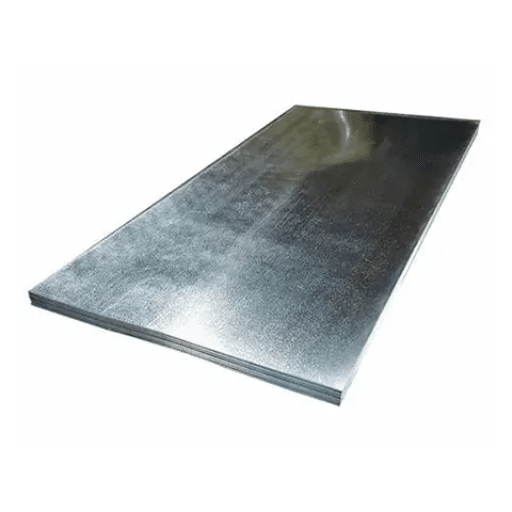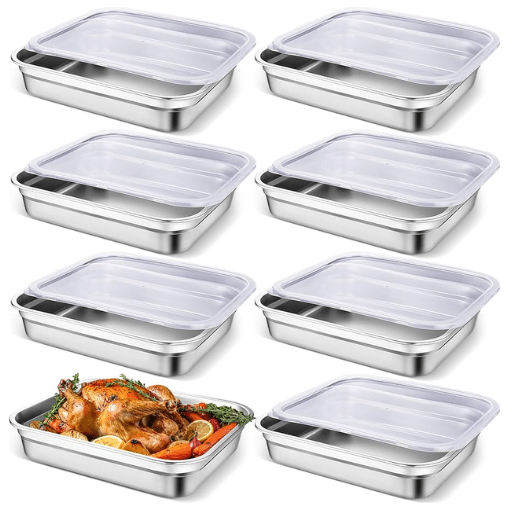
The Florida coastal seafood processor believed they received a bargain when they received a quote which showed 304 stainless steel processing tables at 30% lower cost than competing offers and the supplier guaranteed that the material had “food grade certified” status. The tables which were installed 18 months ago started developing pitting corrosion because of their contact with saltwater. The replacement cost—triple the original quote—taught them a painful lesson about what “food grade” actually means.
Food-grade stainless steel is not a marketing label you can slap on any shiny metal surface. The definition requires specific alloy composition together with surface finish and fabrication quality and certification documentation. Your equipment will fail inspection if you make a mistake with any of the three essential components which will also create contamination risks for food.
This guide explains what makes stainless steel truly food-grade, which grades to specify for different applications, and how to verify your supplier’s claims with proper documentation. The equipment acquisition process for a commercial kitchen or dairy plant or pharmaceutical facility requires you to identify authentic food-grade products which differ from promotional materials.
What Is Food Grade Stainless Steel?

Food grade stainless steel is stainless steel that meets regulatory requirements for safe food contact. The FDA in the United States classifies stainless steel as Generally Recognized As Safe (GRAS) according to 21 CFR 175.300 when its chromium content reaches at least 16%, which 304 and 316 grades exceed.
But alloy composition is only the foundation. Four pillars determine whether stainless steel is truly food-grade:
| Pillar | Requirement | Why It Matters |
|---|---|---|
| Alloy Composition | Minimum 16% chromium | Forms protective oxide layer preventing rust and metal leaching |
| Surface Finish | Ra ≤ 0.8 μm (32 μin) roughness | Prevents bacterial attachment; enables thorough cleaning |
| Fabrication Quality | Smooth welds, no crevices | Eliminates harborage points for bacteria |
| Certification | MTC, DoC, third-party verification | Proves compliance to inspectors and auditors |
The Reddit consensus from food equipment professionals is clear: “Food grade is more about the processing than just the alloy.” A perfectly composed 304 grade becomes non-food-grade if the surface is too rough or welds create bacterial traps.
Why Food Grade Matters
Food-grade specifications protect three interests:
Public Health: Prevents metal leaching (chromium, nickel, lead) into food and eliminates bacterial harborage points that cause contamination.
Regulatory Compliance: FDA, NSF, EU, and local health departments require documented compliance. Failed inspections shut down operations.
Brand Protection: Equipment manufacturers face liability if their products cause foodborne illness or fail customer audits.
Food Grade Stainless Steel Grades

Not all stainless steels are food-safe. Only austenitic grades 304 and 316 meet food contact requirements, while ferritic grade 430 has limited applications and other grades should be avoided entirely.
304 Stainless Steel (18/8) — The Industry Standard
Composition: 18-20% chromium, 8-10.5% nickel, ≤0.08% carbon
304 stainless steel dominates food applications for good reason. Its 18% chromium content exceeds FDA minimums by a comfortable margin, providing excellent corrosion resistance for most food environments. The 8% nickel stabilizes the austenitic structure, making 304 non-magnetic and highly formable.
Typical Food Applications:
- Commercial kitchen worktables and sinks
- Food processing equipment (non-acidic foods)
- Brewing and beverage tanks
- Dairy equipment (non-chlorinated cleaning)
- Storage containers and shelving
Cost: Baseline pricing; most economical food-grade option
When to Specify 304: General food processing, commercial kitchens, indoor environments, non-acidic foods, budget-conscious projects
316/316L Stainless Steel — Premium Protection
Composition: 16-18% chromium, 10-14% nickel, 2-3% molybdenum, ≤0.03% carbon (316L)
The 2-3% molybdenum addition transforms 316 into a corrosion-resistant champion. This element provides superior resistance to chlorides (salt), acids, and harsh sanitizers that attack 304.
Typical Food Applications:
- Coastal seafood processing (salt spray exposure)
- Acidic food processing (tomatoes, citrus, vinegar, pickles)
- Pharmaceutical equipment
- CIP (Clean-in-Place) systems with chlorine sanitizers
- Marine equipment and boat fittings
Cost: 20-35% premium over 304
When to Specify 316: Within 5 miles of coastline, acidic food contact, high-chloride sanitizers, pharmaceutical manufacturing, or when equipment longevity justifies the premium
316L Variant: The “L” indicates low carbon (≤0.03%), essential for welded equipment. Standard 316 can sensitize during welding, reducing corrosion resistance in heat-affected zones.
430 Stainless Steel — Limited Applications
Composition: 16-18% chromium, <0.5% nickel (ferritic, magnetic)
Grade 430 is NOT recommended for direct food contact despite meeting the 16% chromium minimum. Its lack of nickel creates poor corrosion resistance in wet or acidic environments.
Appropriate Uses:
- Equipment housings and panels (non-contact)
- Backsplashes and decorative trim
- Dry storage shelving
- Kitchen utensils (spatulas, ladles with limited food exposure)
Limitations: Will rust with prolonged moisture or acidic food contact. Never specify for tanks, processing surfaces, or equipment in wet environments.
Grades to Avoid for Food Contact
| Grade | Why It’s Unsuitable | Risk |
|---|---|---|
| 201 | Substitutes manganese for nickel; unstable oxide layer | Rusts within 6-12 months; metal leaching |
| 202 | Similar to 201; poor corrosion resistance | Structural failure in food environments |
| 303 | Added sulfur for machinability; 3-A Standard restriction | Sulfur compounds leach into food |
| 420 | Martensitic; high carbon for hardness | Only for knives/blades; poor corrosion resistance |
The 201 grade warning is critical. Overseas suppliers sometimes market 201 as “food grade” at prices 20-30% below 304. Within a year, rust appears. For legitimate food-grade equipment, demand 304 or 316 documentation.
International Standards and Certifications

Regulatory compliance varies by region, but core principles remain consistent: prove the material is safe, traceable, and won’t leach harmful substances into food.
United States Standards
FDA 21 CFR 175.300: Recognizes stainless steel as GRAS (Generally Recognized As Safe) for food contact when containing ≥16% chromium. The regulation covers “resinous and polymeric coatings,” but the GRAS determination applies to bare stainless steel surfaces in contact with food.
NSF/ANSI 51 — Food Equipment Materials: Certifies materials (not just raw metal, but finished equipment components) for food zone contact. Requirements include:
- Corrosion resistance to food acids and cleaning chemicals
- Non-toxic composition
- Cleanability (smooth surface finish)
- No odor or taste transfer to food
NSF/ANSI 61 — Drinking Water System Components: Required for equipment contacting potable water, including beverage dispensers, ice makers, and coffee equipment.
3-A Sanitary Standards: Specific to dairy and food processing equipment, requiring:
- Smooth, easily cleanable surfaces
- No threaded fittings in product contact zones
- Minimum radii on internal corners
- Full penetration welding with smooth finish
European Union Requirements
Regulation (EC) No 1935/2004: The framework regulation requiring materials to:
- Not endanger human health
- Not change food composition unacceptably
- Not alter food taste or odor
EN 10088: Material standards specifying stainless steel grades (1.4301 for 304, 1.4404 for 316L).
EN 1811: Nickel release testing for prolonged skin contact; relevant for food service workers handling equipment. Limit: ≤0.02 mg/cm²/week.
Declaration of Conformity (DoC): Legal document stating compliance with EU regulations. Required for CE marking and importation.
China and Asia-Pacific Standards
GB 4806.9-2016: China’s National Food Safety Standard for Metallic Materials in Food Contact. Specifies:
- Base material requirements
- Migration limits for heavy metals
- Testing methodologies
Migration Limits (GB 4806.9-2016):
| Element | Limit |
|---|---|
| Lead | ≤ 0.01 mg/dm² |
| Cadmium | ≤ 0.005 mg/dm² |
| Arsenic | ≤ 0.008 mg/dm² |
| Chromium | ≤ 0.4 mg/dm² |
| Nickel | ≤ 0.1 mg/dm² |
GB/T 3280-2015: Cold-rolled stainless steel plate specifications (equivalent to ASTM A240).
JIS G4305: Japanese Industrial Standard for cold-rolled stainless steel (SUS304, SUS316L).
Global Standards Cross-Reference
| Standard System | 304 Designation | 316L Designation | Key Certification |
|---|---|---|---|
| USA (ASTM) | S30400 | S31603 | NSF/ANSI 51 |
| EU (EN) | 1.4301 | 1.4404 | Declaration of Conformity |
| China (GB) | 06Cr19Ni10 | 022Cr17Ni12Mo2 | GB 4806.9-2016 |
| Japan (JIS) | SUS304 | SUS316L | JIS certification |
| ISO | X5CrNi18-10 | X2CrNiMo17-12-2 | ISO 15510 |
Surface Finish Requirements
Surface finish determines cleanability more than alloy selection. A poorly finished 316 surface harbors more bacteria than a properly polished 304 surface.
Roughness Specifications (Ra Values)
Ra (Roughness Average) measures surface smoothness in micrometers (μm) or microinches (μin).
| Application | Maximum Ra | Notes |
|---|---|---|
| General food contact | ≤ 0.8 μm (32 μin) | Industry baseline |
| Dairy equipment | ≤ 0.4 μm (16 μin) | 3-A Sanitary Standard requirement |
| Pharmaceutical | ≤ 0.25 μm (10 μin) | Electropolished surfaces |
| High-viscosity foods | ≤ 0.4 μm (16 μin) | Prevents product adhesion |
Surface Finish Designations
No. 4 Finish: Brushed finish using 120-320 grit abrasive. Industry standard for food equipment. Smooth enough for cleaning but not mirror-polished. Cost-effective for most applications.
No. 8 (Mirror) Finish: Highly reflective, ultra-smooth surface. Required for pharmaceutical and some dairy applications. Significantly higher cost.
2B Finish: Cold-rolled, annealed, pickled, and skin-passed. Mill finish that’s smooth but not polished. Acceptable for non-contact surfaces or further finishing.
BA (Bright Annealed): Smooth, reflective finish from controlled atmosphere annealing. Good corrosion resistance; used for decorative and some food applications.
Electropolishing
Electropolishing is an electrochemical process that removes microscopic surface peaks, creating a smoother, more corrosion-resistant surface.
Benefits:
- Reduces Ra by 30-50%
- Removes embedded contaminants and free iron
- Enhances chromium oxide layer
- Required for pharmaceutical and high-purity dairy equipment
Specification: Specify “electropolished to Ra ≤ 0.4 μm” when ordering.
Passivation
Passivation (per ASTM A967) is a chemical treatment that removes free iron from the surface and strengthens the chromium oxide protective layer.
Why It Matters: Machining, welding, and handling deposit free iron on stainless steel surfaces. Without passivation, these iron particles rust, creating “tea staining” that looks like material failure but is actually surface contamination.
Requirement: All food-grade stainless steel equipment should be passivated before service.
Welding and Fabrication Quality
Reddit’s welding community emphasizes: “For food service, welds must be smooth, fully penetrated, and purged. No pockets or crevices where bacteria can hide.”
Food-Grade Welding Requirements:
- Full penetration welds
- TIG welding with argon back-purging for internal surfaces
- Grinding and polishing to match base material finish
- No overlap welds or gaps
Food Grade Applications by Industry

Different food industries impose unique material demands. Here’s how to select grades for specific applications.
Dairy and Beverage Processing
Challenges: Frequent cleaning cycles, CIP (Clean-in-Place) systems with chlorine sanitizers, bacterial sensitivity
Recommended Grade: 316L for tanks, pasteurizers, and piping; 304 for external structures
Why 316L: Chlorine sanitizers attack 304. The molybdenum in 316 provides chloride resistance essential for CIP systems.
Additional Requirements:
- 3-A Sanitary Standards compliance
- Electropolished surfaces (Ra ≤ 0.4 μm)
- Full penetration welds with smooth finish
- Passivation after fabrication
Commercial Kitchen Equipment
Challenges: Heavy use, varied food types, cost sensitivity, NSF certification requirements
Recommended Grade: 304 for most applications
Typical Applications:
- Worktables and prep surfaces
- Sinks and dish tables
- Ovens and steamers
- Refrigeration equipment
- Shelving and storage
When to Upgrade to 316: Coastal locations, seafood-heavy menus, or bleach-heavy cleaning protocols
Meat and Poultry Processing
Challenges: Protein adhesion, aggressive cleaning chemicals, regulatory scrutiny (USDA)
Recommended Grade: 304 standard; 316 for high-chloride sanitizers
Surface Requirements: Smooth finishes prevent protein adhesion. Electropolishing recommended for equipment with frequent product contact.
Regulatory Note: USDA equipment requirements align with NSF/ANSI 51 but add specific sanitation access requirements.
Seafood Processing
Challenges: Salt exposure, coastal environments, corrosion acceleration
Recommended Grade: 316 minimum; 2205 duplex for severe marine exposure
The Coastal Rule: Within 5 miles of coastline, specify 316. Salt spray in coastal air attacks 304 within months.
Real Example: A Florida seafood processor using 304 tables replaced them after 18 months due to pitting. Replacement with 316 tables (at 30% higher initial cost) lasted 8+ years with minimal degradation.
Pharmaceutical and Biotechnology
Challenges: Maximum purity requirements, validation documentation, ASME BPE standards
Recommended Grade: 316L electropolished
Requirements:
- Ra ≤ 0.25 μm (electropolished)
- Full material traceability (heat numbers, MTC)
- Passivation certificate
- ASME BPE compliance for bioprocessing equipment
Certification and Documentation
Documentation proves legitimacy. In an era of counterfeit materials and questionable overseas suppliers, paperwork matters as much as the metal itself.
Mill Test Certificate (MTC / EN 10204 3.1)
The Mill Test Certificate is the foundation of material traceability. It certifies:
- Chemical composition analysis (proving 304 vs. 316 vs. 201)
- Mechanical properties (tensile strength, hardness)
- Heat number for full traceability
- Compliance with specified standards (ASTM, EN, GB)
What to Verify:
- Chromium content ≥ 16% (≥ 18% for 304)
- Nickel content 8-10.5% (304) or 10-14% (316)
- Molybdenum content 2-3% (316 only)
- Carbon ≤ 0.08% (304) or ≤ 0.03% (316L)
Red Flag: Suppliers who cannot provide MTC or provide certificates without heat numbers.
Declaration of Conformity (DoC)
The Declaration of Conformity is a legal document stating that materials comply with applicable regulations (EU 1935/2004, FDA, etc.).
Required For:
- EU importation and CE marking
- Customer audit compliance
- Regulatory inspections
Contents:
- Reference to applicable regulations
- Material grade and specifications
- Manufacturer declaration statement
- Authorized signature and date
Third-Party Certifications
NSF Certification: Applies to finished equipment, not raw materials. Look for NSF logo on commercial kitchen equipment.
SGS / Bureau Veritas / TÜV: Independent inspection agencies that verify material composition and compliance. Third-party inspection adds cost but provides assurance for critical applications.
ISO 9001: Quality management system certification for the supplier. Indicates systematic quality control but doesn’t guarantee specific material compliance.
Migration Test Reports
For EU and China compliance, migration testing proves that heavy metals don’t leach into food above specified limits.
Typical Tests:
- Overall migration (total substances transferred)
- Specific migration (lead, cadmium, chromium, nickel)
- Testing in food simulants (acetic acid, ethanol)
When Required: High-risk applications, regulatory submissions, customer validation requirements.
Traceability Documentation
Heat Number Tracking: Each batch of stainless steel has a unique heat number linking it to chemical composition records. Full traceability requires:
- Heat number on MTC
- Heat number marking on material
- Ability to cross-reference through supply chain
Why It Matters: If a material batch is later found defective, traceability enables targeted recalls rather than scrapping all equipment.
Procurement Checklist for Food Grade Stainless Steel

Use this checklist when sourcing food-grade stainless steel materials or equipment:
Grade Verification
- Specify exact grade (304, 304L, 316, 316L)
- Request chemical composition on MTC
- Verify chromium ≥ 16% (≥ 18% for 304)
- For 316, verify molybdenum 2-3%
- Reject 201, 202, or unspecified “200 series” grades
Surface Finish Confirmation
- Specify maximum Ra value (≤ 0.8 μm standard, ≤ 0.4 μm dairy/pharma)
- Define finish type (No. 4, No. 8, electropolished)
- Require surface roughness measurement report
- Specify passivation requirement (ASTM A967)
Certification Documentation
- Mill Test Certificate (EN 10204 3.1 minimum)
- Declaration of Conformity (for EU/regulated applications)
- Third-party inspection certificate (if applicable)
- Surface finish test report
- Passivation certificate
Supplier Qualification
- ISO 9001 certification
- Food industry references
- Export experience to your region
- Quality complaint history
Fraud Prevention
- Price check: If 304 seems too cheap, it’s probably 201
- Magnet test: 304/316 are non-magnetic (but cold working can cause slight magnetism)
- Chemical spot test: Molybdenum detection reagent distinguishes 316 from 304
- Verify MTC authenticity with mill if uncertain
Logistics and Delivery
- Lead time confirmation
- Export documentation (CO, packing list, bill of lading)
- Packaging to prevent contamination during shipping
- Inspection protocol before acceptance
Frequently Asked Questions
Is 304 stainless steel food grade?
The food safety standards of 304 stainless steel are established by its composition which contains 18-20% chromium that exceeds the FDA minimum requirement of 16% for materials that contact food. The material 304 stainless steel obtained through correct surface treatment and design process achieves suitability for 80 percent of food service operations which includes commercial kitchen work and beverage creation and food service machinery. The stainless steel material functions as the main food-grade stainless steel because it delivers the best combination of protection against corrosion and ability to shape products and manufacturing expenses.
What is the difference between 304 and 316 food grade stainless steel?
The two materials differ primarily because 316 stainless steel contains 2-3% molybdenum which enables 316 to withstand both salt and acid attacks more effectively than 304.316 has a 20-35% higher price than 304. Use 304 for general food processing and indoor environments. Upgrade to 316 for coastal locations, acidic foods (tomatoes, citrus, pickles), high-chloride sanitizers, or pharmaceutical applications. Both materials receive FDA food contact approval when their surfaces are properly completed.
Does food grade stainless steel rust?
Food grade stainless steel which researchers select and maintain according to proper specifications remains rust-free under standard operating circumstances. The material face corrosion when it comes into contact with chlorides that exceed its designated resistance and when its surface contains free iron and when welding work lacks passivation and when workers use an unsafe grade instead of the proper grade or when workers use 201 instead of 304. Equipment which shows rusting on its surface requires investigation into three areas which include checking grade authenticity and verifying surface finish quality and studying environmental exposure that exceeds design limits.
What certifications should food grade stainless steel have?
The essential documentation requirements include three documents which are Mill Test Certificate (MTC) that shows chemical makeup and surface finish test report which shows Ra ≤ 0.8 μm and Declaration of Conformity for regulated applications. NSF/ANSI 51 certification demonstrates that equipment meets food equipment standards whereas this certification applies to equipment instead of raw materials. The third-party inspection certificates from SGS and BV provide vital support for essential functions. The verification process for M requires confirmation through.
Is every type of stainless steel suitable for use with food?
Not every type of stainless steel meets requirements for contact with food. The only austenitic grades which meet food contact standards are 304 and 316. The following grades should be avoided: 201 and 202 (they use manganese instead of nickel which causes them to corrode quickly) and 303 (it contains sulfur additives which 3-A standards restrict) and 430 (it shows weak protection against corrosion when exposed to wet conditions). The food-safe status of food-appropriate grades depends on their required surface finish and fabrication process.
What steps do I need to take in order to prove my stainless steel material meets food grade standards?
You will need to obtain documentation along with testing results to verify your request for Mill Test Certificate which should display chemical composition that matches 304 or 316 specifications. The surface finish needs to be confirmed through measurement reports which show Ra value of 0.8 μm or lower. You need to check whether there is a passivation certificate available. The use of molybdenum detection reagent will help to identify 316 stainless steel because it turns dark when exposed to the reagent. Price check—if 304 seems 20%+ cheaper than market rate, suspect 201 substitution. For essential functions, we need either third-party inspections from SGS or Bureau Veritas or XRF analysis.
Conclusion
The Florida seafood processor discovered an expensive lesson because food grade certification requires more than surface appearance. Their 304 tables failed not because 304 is inadequate but because they bought mislabeled 201 grade from an unverified supplier and paid triple to replace equipment that should have lasted a decade.
Key takeaways for food-grade stainless steel procurement:
- 304 for general use, 316 for aggressive environments—coastal locations and acidic foods justify the 20-35% premium
- Documentation proves legitimacy—MTC, surface finish reports, and Declarations of Conformity matter as much as the metal itself
- Surface finish determines cleanability—Ra ≤ 0.8 μm is essential; electropolishing required for dairy and pharmaceutical
- Verify supplier authenticity—price too low, missing paperwork, or resistance to third-party inspection are red flags
- Fabrication quality completes the picture—proper welding, passivation, and crevice-free design ensure food safety