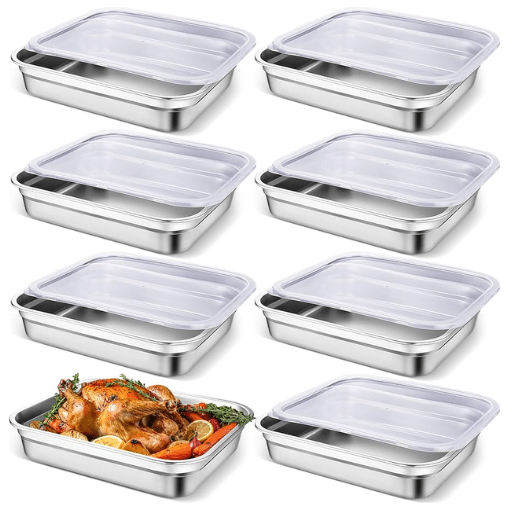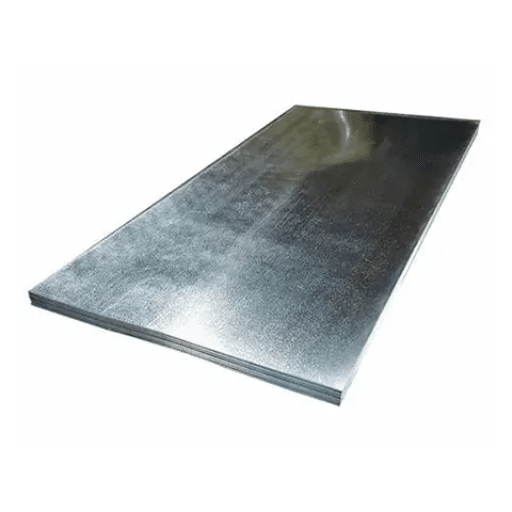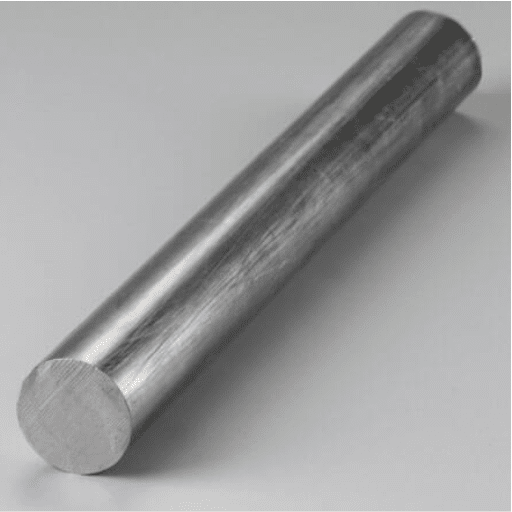
The global marine hardware market exceeds $6 billion annually, and nearly every piece of corrosion-resistant equipment aboard those vessels relies on one specific alloy. Engineers and procurement managers know 316 stainless steel as the “marine grade” upgrade from standard 304, but the technical reasons behind its superiority—and more important for the industry-20-35% cost premium justification-need better understanding across multiple sectors.
The understanding of 316 stainless steel demands a comprehensive exploration which goes beyond its marketing representation. The alloy requires 2-3% molybdenum addition because it serves as the crucial element that establishes its ability to withstand chloride corrosion which its used in saltwater environments and chemical processing and medical applications. The requirement to use 316 stainless steel for all stainless steel applications results in budget waste, while the practice of underspecifying equipment for demanding environments causes early equipment breakdowns which require expensive replacement cycles.
This guide provides the technical foundation for intelligent grade selection. You will learn the precise chemical composition differences between 316, 316L, and 316Ti variants, how to calculate PREN values for pitting resistance comparison, current market pricing across global regions, and the specific environmental thresholds where 316 becomes non-negotiable.
The article provides specifications and selection frameworks which assist you in material selection for coastal construction or pharmaceutical equipment or chemical processing facilities. Our engineering team provides technical material selection consultation services which address your specific application requirements.
What Is 316 Stainless Steel?

The austenitic chromium-nickel alloy 316 stainless steel contains 2-3% molybdenum, which enables the metal to resist chloride pitting and crevice corrosion better than standard 304 stainless steel. The different composition of 316 makes it the best material choice for marine environments and chemical processing and situations which involve contact with salts and acids and strong cleaning products.
The alloy possesses non-magnetic attributes and has excellent formability and welding capabilities which are essential properties of the austenitic family. The material achieves better corrosion protection than 304 through its PREN (Pitting Resistance Equivalent Number) value which ranges from 24 to 26 while 304 has a range of 18 to 20.
Standard 316 contains maximum 0.08% carbon but the low-carbon variant 316L (maximum 0.03% carbon) dominates welded fabrication because it eliminates sensitization risks in the heat-affected zone. The titanium-stabilized 316Ti material prevents carbide precipitation through its titanium content which must meet the requirement of 5×(carbon + nitrogen) for applications that exceed 800°F (425°C).
Why 316 Is Called “Marine Grade”
The “marine grade” designation demonstrates 316’s ability to endure exposure to salt spray and splash zones and coastal atmospheric conditions, but this designation needs essential qualification. 316 successfully protects against atmospheric salt corrosion however its defense system fails when exposed to seawater with chloride levels between 19,000 and 35,000 ppm without proper engineering and cathodic protection and regular upkeep.
Engineers apply the “5-mile rule” in coastal areas which states that facilities within 5 miles of saltwater must use 316 or higher grades for any hardware that will be visible to the public. The performance of 304 material remains sufficient for most situations which do not involve specific chemical exposure needs that would require an upgrade. The use of duplex grades such as 2205 (PREN 35+) and super-duplex alloys establishes adequate protection against corrosion for seawater immersion and high-velocity flow situations.
316 Stainless Steel Chemical Composition
The corrosion resistance of 316 stainless steel stems from precise alloying element balance. While chromium and nickel provide the foundation shared with 304 grade, molybdenum delivers the chloride resistance that distinguishes 316 as a premium alloy for aggressive environments.
| Element | 316 (UNS S31600) | 316L (UNS S31603) | Function |
|---|---|---|---|
| Chromium (Cr) | 16.0-18.0% | 16.0-18.0% | Forms protective oxide layer |
| Nickel (Ni) | 10.0-14.0% | 10.0-14.0% | Stabilizes austenite, improves toughness |
| Molybdenum (Mo) | 2.0-3.0% | 2.0-3.0% | Enhances chloride resistance |
| Carbon (C) | ≤0.08% | ≤0.03% | Affects weldability and sensitization |
| Manganese (Mn) | ≤2.00% | ≤2.00% | Deoxidizer, improves hot working |
| Silicon (Si) | ≤0.75% | ≤0.75% | Deoxidizer |
| Phosphorus (P) | ≤0.045% | ≤0.045% | Trace impurity limit |
| Sulfur (S) | ≤0.030% | ≤0.030% | Trace impurity limit |
| Nitrogen (N) | ≤0.10% | ≤0.10% | Improves pitting resistance |
| Iron (Fe) | Balance | Balance | Base element |
The Molybdenum Difference
Molybdenum transforms 316’s corrosion performance through a specific mechanism: it stabilizes the passive chromium oxide layer against chloride ion penetration. The passive film on 304 stainless steel breaks down in specific areas when exposed to aggressive chlorides which then create rapidly expanding pits. The 2-3% molybdenum in 316 slows this breakdown and reduces pit growth rates by 40-60% in saline environments.
This effect proves particularly valuable in:
- Marine splash zones with cyclic wet/dry exposure
- Chemical processing involving hydrochloric or sulfuric acid contact
- Swimming pool equipment exposed to chlorinated water
- Food processing with frequent chloride-based sanitizer use
- De-icing salt exposure on roadways and bridges
The molybdenum addition also improves resistance to reducing acids and enhances high-temperature strength, though these benefits are secondary to the chloride resistance that drives most 316 specifications.
ASTM A240 Specifications
ASTM A240/A240M governs plate, sheet, and strip specifications for pressure vessel and general applications. The standard specifies minimum mechanical properties that 316 must achieve:
- Tensile Strength: minimum 515 MPa (75 ksi) for 316; 485 MPa (70 ksi) for 316L
- Yield Strength (0.2% offset): minimum 205 MPa (30 ksi) for 316; 170 MPa (25 ksi) for 316L
- Elongation: minimum 40% in 50mm gauge length
- Hardness: maximum 95 HRB or 217 HBW
ASME SA240 adopts identical chemical and mechanical requirements for boiler and pressure vessel code compliance, with additional certification requirements for these safety-critical applications.
316 vs 316L vs 316Ti: Grade Variants

Three primary variants of 316 stainless steel serve distinct application requirements. Selecting the correct variant prevents unnecessary costs while ensuring performance in service.
Standard 316 (UNS S31600)
Standard 316 contains up to 0.08% carbon, making it suitable for applications without welding or where post-weld annealing is practical. The higher carbon content provides marginally greater strength at elevated temperatures compared to 316L, though this advantage rarely justifies the reduced weldability.
Specify standard 316 when:
- Components are machined from bar stock or plate without welding
- Post-weld solution annealing (1040-1100°C followed by rapid cooling) is feasible
- Maximum elevated-temperature strength is critical and welding is not required
Avoid standard 316 when:
- Welded fabrication is involved and post-weld heat treatment is impractical
- Service temperatures exceed 450°C for extended periods (sensitization risk)
316L Low Carbon (UNS S31603)
316L dominates modern 316 consumption by restricting carbon to maximum 0.03%. The 62.5% reduction carbon content which exceeds standard 316 thus prevents chromium carbide precipitation at grain boundaries during welding, which protects against intergranular corrosion within the heat-affected zone.
The “L” designation originated from “low carbon,” and this variant should be specified for virtually all welded structures. The slight reduction in maximum allowable carbon (0.03% vs 0.08%) causes minimal strength reduction while delivering substantial corrosion resistance improvement in welded components.
Specify 316L when:
- Any welding, brazing, or thermal cutting is involved
- Components operate in the 450-850°C sensitization temperature range
- Long-term corrosion resistance in welded structures is required
- You want to eliminate post-weld heat treatment costs
Mechanical property differences from standard 316:
- Slightly lower yield strength (170 MPa vs 205 MPa minimum)
- Equivalent corrosion resistance in non-welded applications
- Superior welded joint performance
316Ti Titanium-Stabilized (UNS S31635)
316Ti adds titanium at 5×(carbon + nitrogen) minimum to 0.70% maximum, creating titanium carbides that preferentially form instead of chromium carbides during high-temperature exposure. This stabilization maintains corrosion resistance at temperatures where 316 and 316L would sensitize.
Specify 316Ti when:
- Service temperatures reach 800-900°F (425-480°C) for extended periods
- Thermal cycling through the sensitization range occurs regularly
- Post-weld annealing is impossible and maximum temperature resistance is needed
Trade-offs versus 316L:
- Higher cost due to titanium addition and production complexity
- Slightly reduced toughness compared to 316L
- Limited availability compared to 316L
For most applications, 316L provides adequate performance at lower cost. Reserve 316Ti for specific high-temperature requirements where sensitization cannot be tolerated.
Mechanical and Physical Properties

316 stainless steel delivers mechanical properties suitable for structural applications while maintaining the formability and toughness expected from austenitic grades.
Room Temperature Mechanical Properties
| Property | 316 | 316L |
|---|---|---|
| Tensile Strength | 515-620 MPa | 485-620 MPa |
| Yield Strength (0.2%) | ≥205 MPa | ≥170 MPa |
| Elongation (50mm) | ≥40% | ≥40% |
| Modulus of Elasticity | 200 GPa | 200 GPa |
| Hardness (Rockwell B) | ≤95 HRB | ≤95 HRB |
| Hardness (Brinell) | ≤217 HB | ≤217 HB |
The higher nickel content (10-14% vs 304’s 8-10.5%) contributes to 316’s excellent toughness and ductility, enabling severe forming operations without cracking. Cold working increases strength and hardness through work hardening, though this reduces corrosion resistance slightly by disrupting the passive layer.
Temperature Performance
Cryogenic Applications: 316 and 316L maintain excellent toughness to temperatures as low as -200°C (-328°F), making them suitable for LNG handling and cryogenic storage equipment. The face-centered cubic austenitic structure prevents the ductile-to-brittle transition observed in ferritic and martensitic grades.
Elevated Temperature Limits:
- Continuous service: 925°C (1700°F) maximum
- Intermittent exposure: 870°C (1600°F) maximum
- Sensitization range: 450-850°C (avoid in this range for standard 316)
At temperatures above 800°F (425°C), carbon diffusion accelerates. Standard 316 requires solution annealing after welding to restore corrosion resistance. 316L resists sensitization better, while 316Ti tolerates these temperatures without special treatment.
Physical Properties
- Density: 7.98 g/cm³ (0.288 lb/in³) – slightly lower than 304’s 8.0 g/cm³
- Melting Range: 1370-1400°C (2500-2550°F)
- Thermal Expansion: 16.5 × 10⁻⁶/°C (20-100°C) – higher than carbon steel; design accommodations required for dissimilar metal joints
- Thermal Conductivity: 16.3 W/m·K at 100°C – approximately 25% of carbon steel conductivity
- Specific Heat: 500 J/kg·K
- Electrical Resistivity: 74 × 10⁻⁸ Ω·m (higher than carbon steel, affecting weld heat input requirements)
Corrosion Resistance and PREN Values
Understanding 316’s corrosion resistance requires moving beyond qualitative “good/better/best” descriptions to quantitative metrics that enable engineering decisions. The PREN value provides this framework.
Understanding PREN (Pitting Resistance Equivalent Number)
PREN is a theoretical index that ranks alloys’ resistance to pitting corrosion based on chemical composition. The most widely accepted formula:
PREN = %Cr + 3.3(%Mo) + 16(%N)
For 316 with typical composition:
- Chromium: 17%
- Molybdenum: 2.5%
- Nitrogen: 0.08%
Calculation: 17 + 3.3(2.5) + 16(0.08) = 17 + 8.25 + 1.28 = ~26.5
| Grade | Typical PREN | Chloride Resistance Level |
|---|---|---|
| 304 | 18-20 | Fresh water, low chloride |
| 316/316L | 24-28 | Moderate chloride, marine atmospheric |
| 317 | 28-32 | Higher chloride than 316 |
| 2205 Duplex | 35 | Seawater resistant |
| 2507 Super Duplex | 42 | Severe seawater environments |
PREN values above 32 are generally considered necessary for continuous seawater exposure. 316’s PREN of ~26 provides excellent resistance to marine atmospheric corrosion and intermittent salt spray, but continuous submersion in seawater requires careful design, coatings, or upgrading to duplex grades.
Chloride Resistance Performance
316 stainless steel demonstrates excellent resistance to chloride-containing environments within its PREN limitations:
Suitable Applications:
- Marine atmospheric exposure (salt spray, splash zones)
- Swimming pool environments (1-3 ppm chlorine)
- Food processing with chloride sanitizers (quaternary ammonium, chlorine dioxide)
- Coastal structures within 5 miles of ocean
- De-icing salt exposure (roadways, bridges)
Caution Required:
- Continuous seawater immersion without cathodic protection
- High-velocity seawater flow (erosion-corrosion)
- Stagnant seawater with microbial activity (MIC)
- Hydrochloric acid at concentrations above 5%
Corrosion Rates:
- Marine atmospheric: <0.01 mm/year
- Seawater splash zone: <0.10 mm/year with proper design
- Continuous seawater immersion: 0.1-0.5 mm/year (variable; design for duplex grades instead)
Crevice Corrosion Considerations
Crevice corrosion occurs in shielded areas (gaskets, lap joints, under deposits) where oxygen depletion creates concentration cells. 316’s molybdenum content improves crevice corrosion resistance compared to 304, but proper design remains essential:
- Avoid tight crevices in marine environments
- Design for drainage to prevent liquid trapping
- Specify 316L for welded joints where crevices cannot be avoided
- Consider duplex grades for severe crevice conditions
316 Stainless Steel Applications by Industry

The combination of corrosion resistance, mechanical properties, and biocompatibility makes 316 stainless steel the material of choice across diverse industries. Application selection depends on matching specific grade variants to service conditions.
Marine and Coastal Applications
Marine environments represent 316’s most recognized application domain. The combination of atmospheric salt spray, splash exposure, and high humidity demands the chloride resistance that molybdenum provides.
Common Marine Applications:
- Boat hardware: Railings, cleats, hinges, deck fittings
- Coastal architecture: Handrails, facades, fasteners within 5 miles of shore
- Seawater handling: Pump shafts, valve components, heat exchanger tubes (with design precautions)
- Offshore equipment: Platform components, processing equipment above splash zone
- Aquaculture: Cage netting supports, feeding equipment
The “5-mile rule” provides practical guidance: specify 316 or higher grades for any hardware exposed to marine atmospheres within 5 miles of saltwater. Beyond this zone, evaluate specific exposure conditions—industrial pollution, de-icing salts, or coastal fog may still warrant 316 despite distance from shore.
For continuous seawater immersion, 316 requires careful design consideration. Cathodic protection, coatings, or specification of duplex 2205 (PREN 35) may prove more cost-effective than 316 for critical submerged components.
Medical and Pharmaceutical
316L stainless steel dominates medical device manufacturing due to its biocompatibility, sterilization tolerance, and corrosion resistance in physiological environments.
Medical Applications:
- Surgical instruments: Scalpels, forceps, retractors (316L for sterilization compatibility)
- Temporary implants: Bone plates, screws, pins for fracture fixation (removed after healing)
- Permanent implants: 316LVM (vacuum melted) for heart stents, orthopedic implants requiring lifetime service
- Pharmaceutical equipment: Processing tanks, piping, cleanroom fixtures
- Dental applications: Instruments and temporary prosthetics
The distinction between 316L and 316LVM (ASTM F138) is critical for permanent implants. Vacuum arc remelting decreases all impurities which include sulfur and phosphorus and non-metallic inclusions that initiate fatigue cracks. The 316LVM alloy demonstrates a microstructure that contains almost no ferrite while its fatigue strength reaches double that of standard 316L which makes it essential for load-bearing implants that require protection against catastrophic failure.
For surgical instruments and temporary implants, standard 316L provides adequate performance at lower cost. Reserve 316LVM for permanent implants or critical safety components.
Chemical Processing
Chemical plants exploit 316’s resistance to sulfuric acid, phosphoric acid, and various organic chemicals at moderate concentrations and temperatures.
Chemical Industry Applications:
- Sulfuric acid handling: Tanks and piping for dilute acid (concentration and temperature limits apply)
- Phosphoric acid production: Evaporators, heat exchangers
- Organic chemical processing: Reactors, distillation columns, storage vessels
- Petrochemical equipment: Heat exchangers, pressure vessels, piping
- Pulp and paper: Digesters, bleaching equipment
Limitations: 316 is not suitable for hydrochloric acid above 5% concentration, hydrofluoric acid, or concentrated sulfuric acid at elevated temperatures. Always consult corrosion charts for specific chemical/concentration/temperature combinations.
Food and Beverage Processing
Food grade 316 stainless steel serves applications where 304’s corrosion resistance proves inadequate.
Food Industry Applications:
- High-acid foods: Tomato processing, citrus equipment, pickling tanks
- Brewing and distilling: Fermentation tanks, aging vessels, heat exchangers
- Dairy processing: Equipment requiring frequent chloride-based sanitizing
- Meat and poultry: Processing equipment with aggressive cleaning protocols
- Salt handling: Brine tanks, salt processing equipment
The FDA recognizes 316 as GRAS (Generally Recognized As Safe) for food contact under 21 CFR 175.300, provided surface finishes meet hygiene requirements (typically Ra ≤ 0.8 μm). NSF/ANSI 51 certification confirms suitability for food equipment materials.
316 vs 304 Stainless Steel: Selection Guide

The decision between 316 and 304 stainless steel represents one of the most common material selection challenges in industrial procurement. The 20-35% cost premium for 316 is justified only when environmental conditions demand its enhanced corrosion resistance.
Side-by-Side Comparison
| Property | 304 Stainless Steel | 316 Stainless Steel |
|---|---|---|
| Chromium | 18-20% | 16-18% |
| Nickel | 8-10.5% | 10-14% |
| Molybdenum | None | 2-3% |
| PREN Value | ~18-20 | ~24-26 |
| Relative Cost | Baseline (100%) | 120-135% |
| Marine Atmospheric | Poor – rusts within months | Excellent – 10+ year life |
| Chloride Resistance | Limited | Good to 1000 ppm |
| Food Grade | Yes (neutral pH) | Yes (including acidic) |
| High Temperature | Good to 800°C | Good to 925°C |
When 304 Is Sufficient
Specify 304 when environmental conditions remain benign and cost efficiency is prioritized:
- Indoor applications without chemical exposure
- Freshwater environments (lakes, rivers, municipal water)
- Food processing with neutral pH foods (baking, dairy without acid)
- General industrial equipment in controlled environments
- Architectural trim in urban or rural (non-coastal) settings
- Household appliances and consumer goods
Using 316 for these applications provides no functional benefit while increasing material costs by 20-35%. The savings from correct 304 specification can be substantial for large projects.
When 316 Is Necessary
Specify 316 when chloride exposure, chemical contact, or regulatory requirements demand superior corrosion resistance:
- Marine environments: Within 5 miles of coast or any saltwater exposure
- Swimming pools: Chlorinated water attacks 304 rapidly
- Chemical processing: Sulfuric, phosphoric, or organic acid contact
- Pharmaceutical manufacturing: Where 316L is specified for purity
- Medical devices: Surgical instruments and implants
- High-acid food processing: Tomatoes, citrus, vinegar, fermentation
- De-icing salt exposure: Roadway hardware, bridges, tunnel fixtures
- Industrial atmospheres: Coastal manufacturing, chemical plants
Cost-Benefit Analysis Framework
The true cost comparison extends beyond material price to lifecycle economics:
Scenario 1: Coastal handrail system
- 304 option: $10,000 material cost, replacement in 3-5 years due to rust
- 316 option: $13,000 material cost, 15+ year service life
- Decision: 316 provides 3x lifecycle at 30% premium = clear economic choice
Scenario 2: Indoor food processing equipment (neutral pH)
- 304 option: $50,000 material cost, 20-year service life
- 316 option: $65,000 material cost, 20-year service life (no functional benefit)
- Decision: 304 provides equivalent performance at lower cost
Overspecification Warning: Some engineers specify 316 “to be safe” for all applications. This conservative approach wastes budget without improving performance. Conduct proper environment assessment—indoor, low-chloride applications rarely justify 316’s premium.
316 Stainless Steel Pricing Guide (2024-2025)

316 stainless steel pricing reflects volatile raw material costs, particularly nickel and molybdenum, combined with regional energy costs and trade policies.
Current Price Range (Late 2025)
| Region | Price per kg | Price per Metric Ton | Notes |
|---|---|---|---|
| China (FOB) | 2.10−2.10−4.90 | 2,100−2,100−4,900 | Lowest cost producer; 55% of global supply |
| India | 2.50−2.50−4.70 | 2,500−2,500−4,700 | Growing export capability |
| United States | 4.50−4.50−6.20 | 4,500−4,500−6,200 | +25% Section 232 tariff impact |
| Europe | 4.45−4.45−5.80 | 4,450−4,450−5,800 | High energy costs; CBAM implementation 2026 |
| Southeast Asia | 4.60−4.60−5.10 | 4,600−4,600−5,100 | Import-dependent markets |
Price by Product Form
| Form | Price Range (USD/kg) | Notes |
|---|---|---|
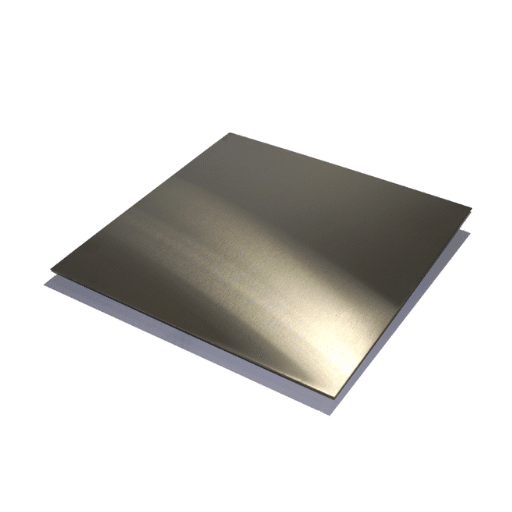
| Cold-rolled sheets (2B finish) | 3.50−3.50−5.50 | Most common industrial form |
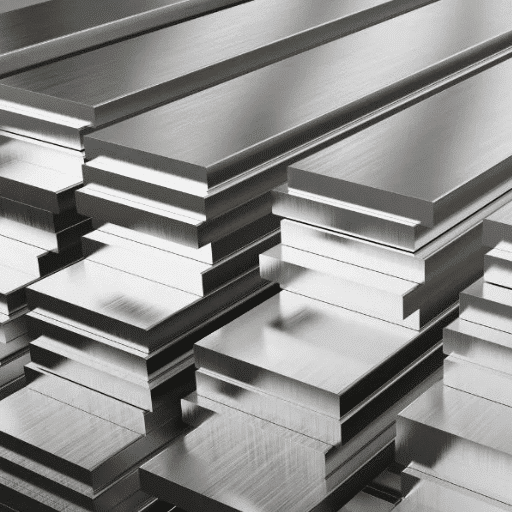
| Hot-rolled plates (No.1 finish) | 3.20−3.20−4.80 | Thicker sections, industrial use |
| Polished sheets (No.4, HL) | 5.50−5.50−7.00 | Architectural/decorative applications |
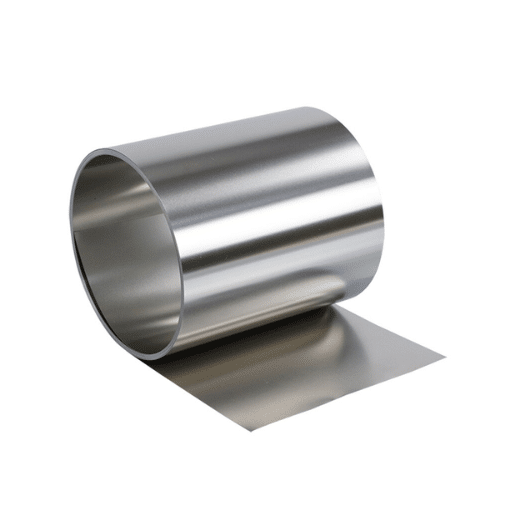
| 316L coils (Asia FOB) | 4.40−4.40−4.80 | Bulk procurement form |
| 316Ti sheets | 3.90−3.90−7.20 | 15-30% premium over 316L |
| Seamless pipes/tubes | 5.00−5.00−7.20 | Pressure applications |
Historical Volatility (2024-2025)
- March 2024 Peak: $6.30/kg (Indonesian nickel export restrictions, molybdenum supply disruption)
- December 2023 Trough: $4.15/kg
- November 2025 Range: 4.50−4.50−4.70/kg (stabilized)
Key Price Drivers:
- Nickel: ~11% of composition; LME price volatility directly impacts 316 cost
- Molybdenum: 2-3% content; adds 0.80−0.80−1.20/kg when prices spike
- Energy: European producers face 2-3x energy costs versus China
- Trade Policy: US Section 232 tariffs create 15-25% price gaps between regions
Procurement Recommendations
For large procurement projects, consider these strategies:
- Material escalation clauses: Contract terms allowing price adjustment for nickel/molybdenum movements above defined thresholds
- Strategic inventory: Purchase during price troughs when project timing permits
- Specification flexibility: Where 316L and 316 are both acceptable, request pricing for both
- Regional sourcing: Chinese FOB pricing offers significant savings; factor in shipping, duties, and lead times
- Mill Test Certificates: Ensure compliance with specified grade (316 vs 316L) through MTC verification
Welding and Fabrication Guidelines

Proper welding procedures are essential to maintain 316’s corrosion resistance. The heat-affected zone (HAZ) is vulnerable to sensitization if improper techniques or filler metals are used.
Filler Metal Selection
For 316 base metal: Use 316 or 316L filler wire/rod
For 316L base metal: Use 316L filler wire/rod (preferred)
The filler metal classification AWS A5.4 E316L for stick electrodes or ER316L for MIG/TIG wire ensures matching composition. Never use 308L filler on 316 base metal—the lack of molybdenum in the weld metal creates a galvanic couple with lower corrosion resistance.
Welding Process Recommendations
| Process | Filler Classification | Notes |
|---|---|---|
| TIG (GTAW) | ER316L | Best control, preferred for thin sections |
| MIG (GMAW) | ER316L | Higher deposition rates for thick sections |
| Stick (SMAW) | E316L | Field welding, all-position capability |
| Flux-cored (FCAW) | E316LT1-1/-4 | High deposition, out-of-position welding |
Sensitization Prevention
Sensitization occurs when carbon combines with chromium at grain boundaries during heating in the 450-850°C range, depleting adjacent areas of chromium and reducing corrosion resistance.
Prevention strategies:
- Specify 316L: Low carbon content prevents carbide formation
- Minimize heat input: Use low amperage, faster travel speeds
- Control interpass temperature: Keep below 150°C for multiple pass welds
- Post-weld annealing: For standard 316, solution anneal at 1040-1100°C followed by rapid water quench
Post-Weld Treatment
As-welded 316L: Generally acceptable for most service conditions; low carbon prevents sensitization
As-welded standard 316: May require solution annealing for critical corrosion applications
Pickling and passivation: Removes weld scale and restores passive layer; essential for marine and chemical service
Common Welding Issues
Hot cracking: Rare in 316 due to austenitic structure, but can occur with excessive restraint. Use proper joint design and filler metal.
Distortion: High thermal expansion coefficient (16.5 × 10⁻⁶/°C) causes more distortion than carbon steel. Use skip welding, fixturing, and controlled heat input.
Reduced corrosion resistance in HAZ: Mitigated by using 316L base metal and proper filler selection.
Specifications and Standards
316 stainless steel is governed by multiple international standards ensuring consistent chemical composition, mechanical properties, and performance characteristics.
ASTM Standards (United States)
ASTM A240/A240M: Standard Specification for Chromium and Chromium-Nickel Stainless Steel Plate, Sheet, and Strip for Pressure Vessels and for General Applications
- Defines chemical composition limits for 316 (S31600), 316L (S31603), 316Ti (S31635)
- Specifies minimum mechanical properties
- References tolerances, surface finish, testing requirements
ASME SA240: Boiler and Pressure Vessel Code adoption of ASTM A240
- Identical chemical and mechanical requirements
- Additional certification and quality system requirements
- Required for pressure vessel construction in jurisdictional applications
ASTM F138: Standard Specification for Stainless Steel Bar and Wire for Surgical Implants (316LVM)
- Vacuum melting requirements for maximum purity
- Ferrite content limitations
- Enhanced mechanical property requirements
European Standards
EN 10088-2: Technical delivery conditions for sheet/plate and strip of corrosion resisting steels for general purposes
- 1.4401 (X5CrNiMo17-12-2) = 316
- 1.4404 (X2CrNiMo17-12-2) = 316L
- 1.4571 (X6CrNiMoTi17-12-2) = 316Ti
EN 10204: Metallic products—Types of inspection documents
- 3.1 Mill Test Certificate (MTC) requirements for traceability
- Chemical composition verification
- Mechanical test results
Asian Standards
JIS G4304: Hot-rolled stainless steel plate, sheet and strip
- SUS 316 = 316
- SUS 316L = 316L
JIS G4305: Cold-rolled stainless steel plate, sheet and strip
GB/T 3280: Cold-rolled stainless steel plate, sheet and strip (China)
- 06Cr17Ni12Mo2 = 316
- 022Cr17Ni12Mo2 = 316L
GB/T 4237: Hot-rolled stainless steel plate, sheet and strip (China)
Medical Standards
ISO 5832-1: Implants for surgery—Metallic materials—Part 1: Wrought stainless steel
- International standard for surgical implant materials
- Composition and mechanical property requirements
ASTM F139: Standard Specification for Stainless Steel Sheet and Strip for Surgical Implants (wrought 316L)
Certification Requirements
For industrial procurement, specify:
- Mill Test Certificate (EN 10204 3.1): Chemical composition and mechanical properties
- Material certification: Compliance with specified standard (ASTM A240, EN 10088-2, etc.)
- Third-party inspection: SGS, BV, or equivalent verification (recommended for critical applications)
- Traceability: Heat number tracking from mill to finished product
FAQ
What is the difference between 316 and 316L stainless steel?
316L contains maximum 0.03% carbon compared to 316’s maximum 0.08%. This lower carbon content prevents chromium carbide precipitation at grain boundaries during welding, eliminating sensitization and intergranular corrosion in the heat-affected zone. All welded structures must use 316L while standard 316 should only be used for parts that do not require welding or will undergo solution annealing after welding.
Is 316 stainless steel magnetic?
The material shows almost no magnetic properties after it undergoes the annealing process because 316 functions as a non-magnetic material. The austenitic grades display a face-centered cubic crystal structure that results in minimal magnetic response. The process of cold working creates minor ferromagnetism through martensite development although the effect usually remains low (permeability
How much more expensive is 316 than 304?
The cost of 316 stainless steel exceeds 304 grade by 20-35%. The current market prices range from 2.10/kg(ChinaFOB)to2.10/kg(ChinaFOB)to6.20/kg (US domestic), with the premium pricing resulting from different levels of molybdenum and nickel and production volume. The cost difference changes according to raw material market prices because 316 premium increases to 40% when nickel or molybdenum prices reach peak levels.
Can 316 stainless steel rust?
316 stainless steel develops rust under certain conditions because it resists corrosion better than 304 stainless steel. Surface contamination with carbon steel (from tools, handling, or nearby grinding) can cause “free iron” rust spots. 316 stainless steel will eventually corrode in environments which include continuous seawater immersion and high chloride concentrations and hydrochloric acid exposure. Proper design, maintenance, and grade selection for the specific environment are essential.
What is the PREN value of 316?
The PREN value for 316 stainless steel measures 24-26 according to the formula which combines chromium percentage with three times molybdenum percentage and sixteen times nitrogen percentage. The typical composition of 17% chromium with 2.5% molybdenum and 0.08% nitrogen results in a calculation of 26.5 through this formula. The PREN value for 304 stainless steel ranges from 18 to 20 which shows that 316 stainless steel has approximately 40 percent higher resistance to pitting. The standard for continuous seawater exposure requires materials to have PREN values which exceed 32.
Is 316L surgical grade stainless steel?
The “surgical grade” term specifically applies to 316LVM (ASTM F138) which serves as the standard material for permanent implants, although 316L functions as the primary material for surgical instruments and temporary implants. The “VM” designation denotes vacuum arc remelting, which functions to eliminate impurities plus inclusions that could lead to fatigue failure. Surgical instruments which undergo sterilization and reuse require standard 316L to deliver sufficient performance. Implant procedures for heart stents and hip replacements require the use of 316LVM as the specified material.
What filler rod should I use for welding 316 stainless steel?
The welding process for 316 base metal requires 316L filler metal, which includes ER316L for TIG/MIG welding and E316L for stick welding. The “L” filler ensures low carbon content in the weld deposit, which prevents sensitization. The use of 308L filler on 316 base metal must be avoided because the weld metal will lose molybdenum content, which results in decreased corrosion resistance compared to base metal and establishes a galvanic couple that is prone to selective corrosion.
What is the 5-mile rule for 316 stainless steel?
Facilities which operate within five miles of saltwater require 316 or higher grades specifications for their exposed hardware. The coastal atmosphere carries salt, which leads to rapid corrosion of 304 while 316 provides effective resistance against atmospheric salt spray. Beyond 5 miles, specific industrial conditions must be evaluated because industrial pollution and de-icing salt exposure plus coastal fog may still make 316 necessary to use.
Conclusion
316 stainless steel earns its reputation as the premium austenitic grade through 2-3% molybdenum content that fundamentally improves chloride corrosion resistance. 316 stainless steel functions reliably in marine atmospheres, chemical processing and medical applications which exceed the operational limits of standard grades between its PREN value of approximately 26 and 40 percent over 304 stainless steel.
The 316 family contains different grade variants that fulfill particular requirements for production and operational use. 336L should be used for all welded structures because it prevents material sensitization. The standard 316 grade should be used in non-welded parts that can undergo post-weld annealing treatment. 316Ti should only be used in high-temperature applications which require carbide precipitation stabilization above 800°F.
Cost considerations matter. The 20-35% price premium over 304 is justified in aggressive environments—coastal locations, chemical exposure, and medical applications—where lifecycle costs favor superior corrosion resistance. In indoor spaces that have harmless conditions the use of 316 steel creates unnecessary expense because it does not provide any operational advantages. The “5-mile rule” and PREN evaluation provide practical frameworks for intelligent grade selection.
The boat owner installed 304 fittings to reduce costs. The entire assembly required replacement after 18 months because salt corrosion made operation impossible. Selecting the correct grade at the initial purchase would have resulted in higher first costs. The replacement process would have resulted in operational costs of replacement labor and materials expenses during the following two years.
For your next project involving corrosion-resistant materials, contact our engineering team for technical consultation on grade selection, specifications, and current pricing. LIANYUNGANG DAPU METAL CO., LTD supplies 316/316L/316Ti stainless steel in sheets, plates, coils, and processed forms with full mill certification and global delivery capability.