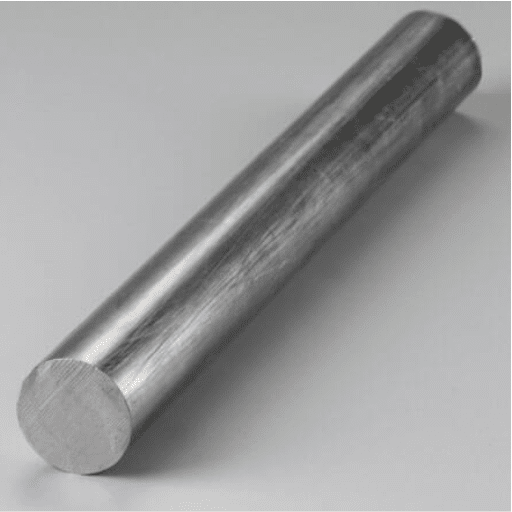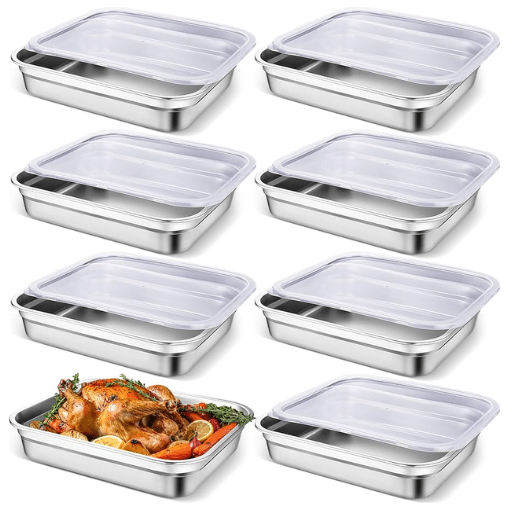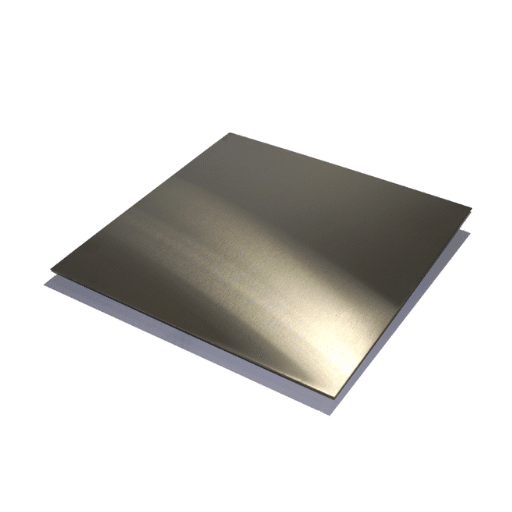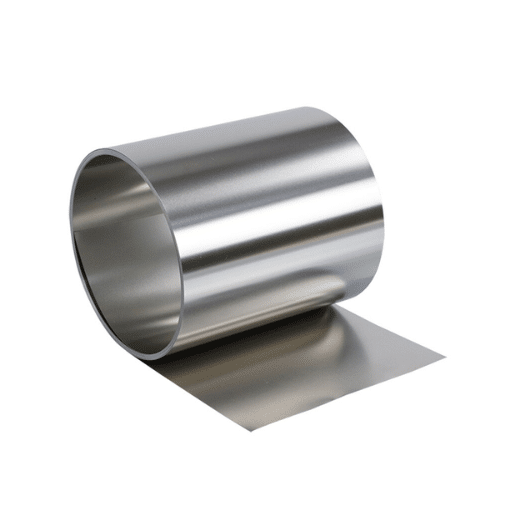
The 20-40% cost savings of 201 stainless steel tempts procurement managers facing tight budgets but using the wrong grade for your application can turn those savings into costly replacement cycles within months. The understanding of 201’s lower price advantages requires total cost of ownership analysis, which helps determine when to choose 304’s proven corrosion resistance as the better long-term investment.
Engineers and buyers often encounter 201 as a “budget-friendly alternative” to 304, particularly from suppliers emphasizing price competitiveness. The actual cost of 201 is 30-50% lower than its per-kilogram price but its increased manganese content and reduced chromium and nickel components result in performance restrictions which cause customers to lose their initial savings through equipment breakdowns and higher maintenance expenses and failing to meet regulatory standards.
The guide establishes technical knowledge that helps users choose the right grade. The presentation will cover chemical composition differences and corrosion resistance measurements and current 2024-2025 global market prices and food safety regulatory status and practical decision framework for matching grade to application requirements.
What Is 201 Stainless Steel?

The nickel shortages of World War II prompted the development of 201 stainless steel as a budget-friendly alternative to 304 grade through its creation of an austenitic chromium-nickel-manganese alloy. The metallurgists developed a new stainless steel material by using higher manganese and nitrogen content to replace expensive nickel while maintaining austenitic structure and reasonable corrosion resistance at lower material costs.
The unified numbering system designates this grade as UNS S20100. The alloy contains 16-18% chromium, 3.5-5.5% nickel, and notably 5.5-7.5% manganese—nearly three times the manganese content of 304 stainless steel. The protective chromium oxide layer which defines stainless steels develops through 201 stainless steel composition but its effectiveness decreases when compared to grades with higher chromium and nickel content.
The introduction of 201 stainless steel through 200-series development started as a response to both strategic material shortages and economic pressures which still drive its current applications. The price difference between 201 and 304 stainless steels becomes wider during nickel price spikes, which occurred in March 2024 when LME nickel reached $20,000 per tonne, thus creating greater procurement pressure to select the less expensive grade.
The Nickel Substitution Story
The key to understanding 201’s cost advantage lies in its compositional economics. The production ofstandard 300-series austenitic grades requires nickel to make up about 60%of their total raw material expenses. Producers create a new alloy by lowering the nickel content from 304’s 8-10.5%to 201’s 3.5-5.5%while adding 5.5-7.5%manganese and nitrogen which produces an alloy that reaches 70%of 304’s performance for 60-80%of the material cost.
Manganese stabilizes the austenitic crystal structure like nickel, though less effectively. Although nitrogen additions strengthen the alloy and improve its corrosion resistance, they cannot completely offset the loss of chromium and nickel. The result is a genuinely serviceable stainless steel for appropriate applications—primarily indoor, low-corrosion environments—at attractive pricing.
Chemical Composition: The Fundamental Difference
The performance differences between 201 and 304 stem directly from their elemental compositions. Understanding these differences enables informed material selection based on actual service requirements.
| Element | 201 Stainless Steel | 304 Stainless Steel | Impact |
|---|---|---|---|
| Chromium (Cr) | 16.0-18.0% | 18.0-20.0% | Lower corrosion resistance in 201 |
| Nickel (Ni) | 3.5-5.5% | 8.0-10.5% | Reduced toughness and stability in 201 |
| Manganese (Mn) | 5.5-7.5% | ≤2.0% | Higher work-hardening in 201 |
| Carbon (C) | ≤0.15% | ≤0.08% | Slightly lower weldability for 201 |
| Nitrogen (N) | ≤0.25% | ≤0.10% | Strength contribution in 201 |
| Iron (Fe) | Balance | Balance | Base element |
The 2% lower chromium content in 201 results in thinner passive oxide layers that less effectively protect stainless steel from corrosion. The difference between these two methods shows important value in extreme conditions, but it shows no impact in standard indoor situations.
The 5.5-7.5% manganese content in 201 produces different manufacturing and operational properties when compared to the maximum 2% found in 304. The work-hardening rate of manganese helps 201 achieve greater strength through cold work, but it makes both forming and welding operations more challenging. The high manganese content also drives food safety concerns discussed in subsequent sections.
Mechanical Properties: Strength vs Workability
201 and 304 offer comparable mechanical properties in the annealed condition, with important differences emerging during fabrication and service.
| Property | 201 Stainless | 304 Stainless |
|---|---|---|
| Tensile Strength | 515-655 MPa | 515-620 MPa |
| Yield Strength (0.2%) | 260-275 MPa | 205 MPa |
| Elongation | ≥40% | ≥40% |
| Hardness (Rockwell B) | ≤95 HRB | ≤95 HRB |
| Density | 7.81-7.93 g/cm³ | 8.00 g/cm³ |
The higher yield strength of 201 (260-275 MPa vs 204 MPa) reflects nitrogen solid-solution strengthening. The material offers minor benefits for structural performance which demonstrates its increased capacity to withstand work hardening. The cold-working process of 201 through rolling and drawing and forming operations results in work-hardening which occurs at twice the speed of 304 while achieving greater strength through the need for intermediate annealing during extreme forming processes.
The designers should understand that 201 provides equivalent strength to 304 or better in final products, while fabricators must deal with increased equipment damage and possible material failure during difficult shaping processes. The difference in density between 201 and 304, which shows 7.81-7.93 g/cm³ for 201 and 8.00 g/cm³ for 304, leads to different weight calculations because 201 contains less nickel.
Corrosion Resistance: Where Grades Diverge

The corrosion resistance differential between 201 and 304 represents the most critical selection factor for many applications. While both grades resist atmospheric corrosion, their performance diverges significantly in demanding environments.
Outdoor Performance Reality
The material 201 shows visible rusting after 6 to 24 months of outdoor exposure, while 304 maintains its visual quality for 3 to 4 years and beyond. The 201 material demonstrates 3 to 5 times shorter lifespan than the 201 material shows which leads to replacement costs that erase its initial cost benefits.
The maintenance expenses demonstrate identical results. 201 outdoor installations require annual expenses between $150 and $500 for each square meter to perform cleaning passivation and corrosion control activities. The 304 installations require basic washing as their only maintenance need during the same time period.
The divergence accelerates in specific environments:
- Marine atmospheres: 201 shows rust within 3-6 months; 304 lasts 2-3 years
- Industrial pollution: Acid rain accelerates 201 attack significantly
- High humidity: Condensation drives pitting in 201 at 2-3x 304’s rate
- De-icing salt exposure: Road salt causes rapid 201 deterioration
Why 201 Corrodes Faster
Three factors drive 201’s inferior corrosion resistance:
- Lower chromium content: The 16-18% chromium in 201 versus 18-20% in 304 creates a thinner, less robust passive oxide layer. This Cr₂O₃ film provides stainless steel’s corrosion protection; its reduced effectiveness in 201 leaves the substrate more vulnerable.
- Manganese effects: High manganese content destabilizes the passive layer under aggressive conditions. Manganese oxides formed during corrosion are less protective than chromium oxides, allowing continued attack.
- Inclusion content: 201 typically contains more non-metallic inclusions than 304, creating sites for pitting initiation. These microscopic composition variations create galvanic cells that accelerate localized corrosion.
Is 201 Stainless Steel Food Grade?
The food safety status of 201 stainless steel generates significant confusion among buyers. While 201 finds use in some food-contact applications, regulatory limitations and health concerns restrict its appropriate use.
Manganese Leaching Concerns
The 5.5-7.5% manganese content in 201 creates the primary food safety issue. Testing demonstrates that 201 can leach up to 0.3 mg/L of manganese into acidic foods or beverages—three times the WHO provisional guideline of 0.1 mg/L for chronic manganese exposure.
A 2022 comparative study found 201-grade containers released 3.2× more manganese than equivalent 304 containers under identical test conditions. This leaching accelerates with:
- Acidic foods (tomato sauce, citrus, vinegar)
- Hot liquids (temperature increases ion mobility)
- Prolonged contact (storage vs brief contact)
- Surface damage (scratches expose fresh metal)
Manganese is an essential trace nutrient at low levels but neurotoxic at elevated chronic exposure. While dietary manganese from 201 cookware is unlikely to cause acute toxicity for most adults, children and pregnant women face higher vulnerability. California Proposition 65 listing of manganese compounds as reproductive toxicants adds regulatory complexity.
Regulatory Status by Region
United States (FDA): The FDA permits 201 for “low-corrosion food contact applications” under 21 CFR 175.300, but 304 remains the recognized industry standard. The FDA has not evaluated 201 specifically for high-acid or long-term food contact.
European Union: The EU Regulation 1935/2004 and LFGB (German Food and Feed Code) generally exclude 201 from food-contact approval due to heavy metal migration concerns. 304 and 316 dominate European food equipment.
China (GB 4806.9): The Chinese national food safety standard explicitly recommends against 201 for tableware, specifying 304 (06Cr19Ni10) as the mainstream food-contact grade.
Safe vs Unsafe Food Applications
Never use 201 for:
- Children’s bottles or feeding equipment
- Acidic food storage (pickles, fermented foods, tomato products)
- Long-term liquid storage (thermos liners, water bottles)
- Cooking vessels with prolonged food contact
- Commercial food processing equipment
Limited acceptable use:
- Brief-contact serving utensils (spatulas, ladles with short exposure)
- Non-acidic dry food storage
- Equipment frames and non-contact surfaces
- Decorative elements in food service areas
For all food-contact applications, 304 or 316 stainless steel provides appropriate safety margins with established regulatory acceptance.
201 vs 304 Price Comparison (2024-2025)

Current market pricing reflects both raw material costs and regional supply dynamics. Understanding total cost of ownership—not just material price—drives intelligent procurement decisions.
Current Pricing by Region
| Region | 201 (USD/kg) | 304 (USD/kg) | 201 Savings |
|---|---|---|---|
| China (FOB) | 1.80−1.80−2.20 | 2.50−2.50−3.00 | 20-35% |
| India | 2.00−2.00−2.50 | 2.70−2.70−3.20 | 20-30% |
| United States | 2.80−2.80−3.50 | 4.10−4.10−4.65 | 25-35% |
| Europe | 2.60−2.60−3.20 | 3.85−3.85−4.20 | 25-35% |
On a per-ton basis, 201 typically costs 1,200−1,200−2,200 while 304 ranges 1,800−1,800−3,000, representing savings of 600−600−1,000 per metric ton. This differential widens during nickel price spikes and narrows when nickel markets soften.
Historical volatility shows significant risk: March 2024 saw 304 prices reach 6.30/kg(FOBAsia)followingIndonesiannickelexportrestrictions,while201peakedatonly6.30/kg(FOBAsia)followingIndonesiannickelexportrestrictions,while201peakedatonly4.50/kg. During such periods, the absolute dollar savings for 201 increase substantially, amplifying procurement pressure.
Total Cost of Ownership Analysis
Material cost represents only one component of lifecycle economics. Consider a coastal handrail project:
Scenario: 100 meters of architectural handrail
| Cost Factor | 201 Grade | 304 Grade |
|---|---|---|
| Material | $8,000 | $12,000 |
| Fabrication | $3,000 | $2,500 (easier welding) |
| Installation | $2,000 | $2,000 |
| Maintenance (5 years) | 4,500(4,500(900/year) | 500(500(100/year) |
| Replacement (Year 3) | $8,000 | $0 |
| 5-Year Total | $25,500 | $17,000 |
In this scenario, 201’s 4,000materialsavingsgenerates4,000materialsavingsgenerates8,500 in additional costs within five years. The replacement cycle—18-24 months for 201 versus 8-10 years for 304 in coastal environments—drives this economic reversal.
For strictly indoor, climate-controlled decorative applications where corrosion risk is minimal, 201’s cost advantage holds value. For any exterior, humid, or corrosive environment, 304’s higher initial cost proves economically superior.
Magnetic Properties and Testing
The magnetic behavior of 201 versus 304 provides both practical identification methods and application-specific implications.
Magnetic Characteristics
201 Stainless Steel: Non-magnetic in the fully annealed condition, but becomes noticeably magnetic after cold working. The high manganese content promotes austenite instability during deformation, causing partial transformation to martensite that exhibits ferromagnetism.
304 Stainless Steel: Generally remains non-magnetic even after moderate cold working. Only severe deformation or exposure to sub-zero temperatures induces significant martensite formation and magnetic response.
This magnetic difference creates a simple field identification test: a strong magnet will stick to cold-worked 201 (drawn wire, stamped components, bent sheet) while showing minimal attraction to similarly worked 304. However, annealed 201 and 304 both resist magnetism, limiting this test’s reliability for soft materials.
Induction Cooking Implications
The magnetic properties affect induction cooktop compatibility. 201’s tendency to become magnetic when cold-worked means drawn cookware (pots, pans) often works on induction without special base cladding. 304 cookware requires either magnetic steel base layers or specific alloy formulations for induction compatibility.
For kitchen equipment procurement, this means:
- 201 cookware may work on induction without modification
- 304 cookware needs verification of magnetic base or induction-specific grade
- The advantage reverses for annealed sheet applications (neither grade is magnetic)
Magnet Test Procedure
To distinguish 201 from 304 using a magnet:
- Obtain a strong neodymium magnet (refrigerator magnets are too weak)
- Test on a known 304 sample first to establish baseline
- Apply magnet to the material surface
- Strong attraction: Likely 201 (or 430 ferritic grade)
- Weak/no attraction: Likely 304 or annealed 201
- Test cold-worked areas (edges, bends) where 201 shows strongest response
Note: This test provides indication, not proof. Chemical analysis or mill certification provides definitive identification.
Welding and Fabrication Challenges

201 presents distinct fabrication challenges compared to 304, affecting both processing costs and finished product quality.
Heat Input Sensitivity
201’s thermal expansion coefficient (approximately 16.6 × 10⁻⁶/°C) exceeds that of 304, creating greater distortion during welding. The alloy’s lower thermal conductivity concentrates heat in the weld zone, requiring careful heat input control to prevent:
- Excessive grain growth in the heat-affected zone (HAZ)
- Hot cracking during solidification
- Warpage and dimensional instability
Recommended practices include:
- Stringer beads rather than weaving to reduce heat input
- Controlled interpass temperature below 150°C
- Skip welding sequences to balance thermal stresses
- Fixturing to constrain distortion
Hot Cracking Susceptibility
The austenitic structure of 201, combined with its thermal characteristics, increases susceptibility to hot cracking (solidification cracking) during welding. Maintaining approximately 3-8% ferrite in the weld metal helps prevent this by providing ferrite-austenite interfaces that accommodate solidification shrinkage.
Use 308L or 309L filler metal rather than matching composition fillers. These provide appropriate ferrite levels and match 201’s corrosion resistance adequately for most applications.
Post-Weld Treatment
201 welds require pickling and passivation to restore corrosion resistance in the heat-affected zone. Heat tint removal is essential—welds with oxide discoloration show dramatically reduced corrosion resistance, particularly in the sensitized HAZ.
For critical applications, solution annealing after welding (1050°C followed by rapid cooling) restores full corrosion resistance, though this adds processing cost that may eliminate 201’s material savings.
When to Choose 201 vs 304
The decision framework for grade selection balances cost constraints against performance requirements, regulatory compliance, and lifecycle economics.
Choose 201 When:
Application is strictly indoor and climate-controlled
- Office furniture, interior trim
- Dry environment structural components
- Non-corrosive atmosphere guarantee
Budget constraints are severe and service life is secondary
- Temporary installations
- Cost-sensitive consumer goods
- Replaceable components
Application is decorative with no structural or safety requirements
- Architectural trim in protected locations
- Display fixtures
- Non-load-bearing elements
Fabrication requirements are minimal
- Simple bending and cutting
- No welding or minimal welding
- Standard forming operations
Regulatory requirements permit 201
- Non-food industrial applications
- Non-marine/non-chemical environments
- Indoor electrical enclosures
Choose 304 When:
Food contact is involved
- Kitchenware and cookware
- Food processing equipment
- Commercial food service
- Beverage containers
Outdoor or humid environments are expected
- Marine and coastal applications
- Exterior architectural elements
- Swimming pool environments
- High-humidity industrial settings
Long service life is required
- Permanent installations
- Warranty-sensitive products
- Hard-to-replace components
Appearance retention matters
- Customer-facing products
- Premium positioning
- Visible architectural elements
Welding and complex fabrication are needed
- Structural fabrications
- Pressure vessels
- Piping systems
- Complex formed components
Regulatory compliance is critical
- Medical devices
- Food equipment certification
- Pharmaceutical applications
- International export requirements
How to Identify 201 vs 304 Stainless Steel

When grade verification is essential, several methods provide identification with varying reliability.
Magnet Test
As discussed in the magnetic properties section, cold-worked 201 attracts magnets more strongly than 304. Apply a strong neodymium magnet to the material:
- Strong attraction suggests 201 (or 430 ferritic grade)
- Minimal attraction suggests 304 or annealed 201
Limitations: Annealed materials show no difference; surface coatings may interfere.
Spark Test
Grinding the material produces sparks with characteristic patterns:
- 201: Short, orange sparks with moderate branching
- 304: Longer, brighter sparks with more complex branching
This test requires experience and comparison samples for reliable interpretation.
Chemical Spot Testing
Commercial test kits use selective chemical reactions to identify grades:
- Molybdenum detection distinguishes 316 from 304/201
- Nickel detection differentiates 304 (high nickel) from 201 (low nickel)
- Chromium verification confirms stainless vs carbon steel
These kits provide field identification with reasonable accuracy when instructions are followed carefully.
Mill Test Certificates (MTC)
The definitive identification method requires documentation review. Mill test certificates per EN 10204 3.1 or 3.2 specify:
- Grade designation (UNS S20100 vs S30400)
- Chemical composition verification
- Mechanical property test results
- Heat number for traceability
Always request MTCs for critical applications and verify grade markings match requirements.
Visual Appearance Clues
While unreliable alone, visual cues provide hints:
- 201: Slightly darker, more gray appearance; hazier surface finish
- 304: Brighter, more silvery appearance; clearer surface reflection
These differences result from manganese content effects on surface oxide films and light reflection.
Industry Applications by Grade

Real-world application patterns demonstrate where each grade delivers appropriate value.
Common 201 Applications
Indoor Decorative: Wall panels, trim, elevator interiors in climate-controlled buildings
Furniture: Frames, legs, supports for indoor use away from moisture
Railway Vehicles: Interior trim and fixtures where corrosion exposure is minimal
Low-Cost Appliances: Washing machine drums, refrigerator liners (interior, dry zones)
Automotive Trim: Interior components, non-structural decorative elements
Industrial Tubing: Structural and decorative tubing for indoor equipment frames
Required 304 Applications
Food Processing: Tanks, conveyors, work surfaces, all food-contact equipment
Kitchenware: Cookware, utensils, sinks, commercial food service equipment
Medical Instruments: Surgical tools, equipment, pharmaceutical processing
Marine Hardware: Boat fittings, coastal architecture, pool equipment
Chemical Processing: Tanks, reactors, heat exchangers, piping systems
Architectural (Exterior): Building facades, handrails, roofing in exposed locations
Beverage Industry: Brewing equipment, wine tanks, soft drink processing
FAQ
What are the distinctions between 201 and 304 stainless steel materials?
The composition of 201 includes 16 to 18 percent chromium and 3.5 to 5.5 percent nickel and 5.5 to 7.5 percent manganese while 304 includes 18 to 20 percent chromium and 8 to 10.5 percent nickel and maximum 2 percent manganese. The different compositions of 201 and 203 lead to a price difference between 20 and 40 percent which results in lower corrosion resistance for 201 especially in outdoor humid and salt-exposed environments. 201 stainless steel material does not meet food grade standards for most purposes while 304 stainless steel material serves as the industry standard for food contact applications.
Does 201 stainless steel exhibit magnetic properties?
201 stainless steel exhibits non-magnetic properties in its fully annealed state while its magnetic properties develop after undergoing cold work. The high manganese content causes partial transformation to magnetic martensite during deformation. The magnetic characteristics of 304 remain intact even after the material undergoes moderate cold work. The magnetic response provides a field identification method: cold-worked 201 attracts magnets more strongly than 304.
Is 201 stainless steel food grade?
For prolonged or acidic food contact 201 is generally NOT considered food grade. The high manganese content (5.5-7.5%) can leach into foods at levels exceeding WHO guidelines. The FDA allows limited use of 304 for low-corrosion food contact applications although 304 remains the recognized standard. EU regulations often exclude 201 from food-contact approval. The use of 201 in products for children and storage of acidic food and cooking utensils must never occur.
Why is 201 cheaper than 304?
The price of 201 stainless steel exists at 20-40% lower than 304 because it uses manganese and nitrogen instead of costly nickel which makes up 8-10.5% of 304. The raw material expenses of austenitic stainless steels depend on nickel which accounts for 60% of total material expenses. Manganese serves as a cost-effective substitute that enables manufacturers to produce stainless steel products at lower expenses while maintaining essential material characteristics.
Does 201 stainless steel rust?
201 steel exhibits faster rusting than 304 steel according to research findings. The outdoor exposure testing of 201 shows visible rust after 6-24 months while 304 requires 3-4 years to develop rust. 201 experiences accelerated corrosion in marine environments which lead to visible rusting within 3-6 months. The chromium content of this material ranges between 16-18% while 18-20% chromium content of another material exists. Both materials will prevent rusting because indoor climate control systems maintain their environments.
Can you weld 201 stainless steel?
The welding process becomes more difficult with 201 than 304 according to experts. The process of welding requires special techniques to address both changes in thermal expansion and differences in thermal conductivity. The selection of filler metal needs to follow actual requirements because hot cracking can occur at any point. The restoration of corrosion protection requires the complete post-weld pickling process and passivation procedure to take place. The heat-affected zones of 201 show more sensitization which leads to decreased corrosion resistance compared to 304.
How can I tell whether my stainless steel material is 201 grade or 304 grade?
The magnet test provides a field indication: apply a strong neodymium magnet to cold-worked areas (edges, bends). The metal shows strong attraction which indicates 201 but the metal shows minimal attraction which indicates 304. Chemical spot testing kits provide more reliable identification. The identification process needs mill test certificates that contain both UNS designation information and chemical composition details (S20100 vs S30400). The visual difference between the two materials shows that 201 has a darker appearance than 304 but this does not provide reliable information.
Is 201 stainless steel safe for cooking?
The 201 alloy cannot be used to create cooking vessels or products which come into contact with food. Manganese content in the substance can leach into food when exposed to acidic substances or hot liquids or when food remains in contact with the soil for an extended period of time. Manganese becomes a neurotoxin when people experience long-term exposure to high levels of the substance. The kitchen equipment needs to be constructed from 304 or 316 stainless steel while all kitchen tools and food processing machines require the same material.
Conclusion
People must decide between 201 and 304 stainless steel based on their need to assess immediate cost benefits against long-term performance and their duty to fulfill regulatory standards and their specific operational needs. The 20-40% material cost advantage of 201 proves economically justified only for strictly indoor, non-food, decorative applications in controlled environments where corrosion exposure is negligible.
Procurement managers use a simple decision framework to select grades because they should choose 201 only when they need to use the material in indoor spaces which will remain dry and will not come into contact with food and they require lower costs and shorter product lifespans. The material cost of 304 which exceeds 304 because of its better corrosion resistance and food safety compliance and fabrication properties provides value through decreased maintenance needs and extended product lifespan and the removal of necessary replacement periods.
The manufacturer who used 201 material for outdoor furniture because he wanted to save 30% on costs had to replace his entire installation after 18 months because rust made the products unsaleable. The 250% cost increase which resulted from “savings” occurred because the proper material choice from the beginning should have been 304.