
17-4 PH Stainless
Grade 630 / S17400
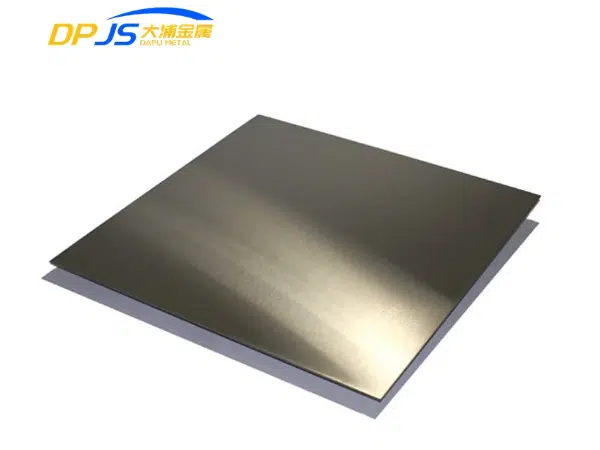
The aerospace standard for high strength and corrosion resistance. We stock Condition A plates and bars, with in-house heat treatment services to H900, H1025, and H1150.
AMS 5643
Certified
44 HRC
Max Hardness
304 Level
Corrosion
The Science of Strength
Understanding the "PH" (Precipitation Hardening) advantage. Why engineers choose Grade 630 over standard stainless steel.
🔬 Copper Precipitation Mechanism
17-4 PH derives its name from its chemical composition (approx. 17% Chromium, 4% Nickel). However, the secret to its performance lies in the addition of Copper (Cu).
During the aging heat treatment (e.g., H900), copper-rich precipitates form within the martensitic matrix. These microscopic particles "pin" the dislocations in the crystal lattice, drastically increasing yield strength without sacrificing the inherent corrosion resistance of the chromium-rich matrix.
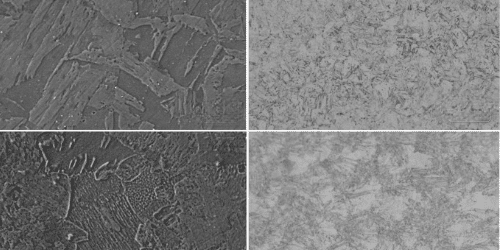
*Simulated view of Tempered Martensite Matrix
Performance Benchmarking
3x Stronger. While retaining similar corrosion resistance to 304 in most environments, 17-4 PH offers yield strengths up to 170 ksi (H900), compared to ~30 ksi for 304.
Superior Corrosion Resistance. Unlike standard 400-series martensitic steels (like 410/416) which rust easily, 17-4 PH resists salt spray and atmospheric corrosion far better.
Cost-Effective Alternative. For applications below 300°C, 17-4 PH offers a high strength-to-weight ratio and easier machinability at a significantly lower cost than Titanium alloys.
Customizable Performance
The versatility of 17-4 PH lies in its response to heat treatment. By adjusting the aging temperature (900°F - 1150°F), we can tailor the material properties to prioritize either Maximum Strength or Improved Ductility.
Peak strength & hardness. Best for high-stress gears and shafts.
Balanced performance. Improved impact toughness over H900.
Maximum ductility and impact strength. Easier to machine.
Detailed Property Table (ASTM A564)
| Condition | Aging Temp | Tensile (min) | Yield (0.2% offset) | Elongation | Hardness (Typ) |
|---|---|---|---|---|---|
| Cond A (Solution) | - | - | - | - | 363 HB max |
| H900 | 900°F (482°C) | 190 ksi | 170 ksi | 10% | 44 HRC |
| H925 | 925°F (496°C) | 170 ksi | 155 ksi | 10% | 42 HRC |
| H1025 | 1025°F (551°C) | 155 ksi | 145 ksi | 12% | 38 HRC |
| H1075 | 1075°F (579°C) | 145 ksi | 125 ksi | 13% | 36 HRC |
| H1150 | 1150°F (621°C) | 135 ksi | 105 ksi | 16% | 33 HRC |
Critical Industries & Applications
Trusted where high strength meets corrosive environments. From the depths of the ocean to the edge of space.


Processing Services & Support
We don't just supply metal; we provide finished material solutions. From heat treatment to technical machining advice.
In-House Aging Services
Most 17-4 PH is stocked in Condition A. We offer precision furnace aging to convert stock material to your required hardness specs.
Stock Material Condition A
Material is solution annealed at 1900°F (1038°C). It is relatively soft (30-33 HRC) and ready for initial machining.
Initial Machining Roughing
Customer (or we) machines the part to near-net shape. Tip: Dimensional change during aging is minimal (approx 0.0004-0.0006 in/in).
Precipitation Hardening Aging Service
We heat the parts to 900°F - 1150°F for 1-4 hours. Copper precipitates form, hardening the matrix.
Final Product H900 / H1150
Parts achieve full strength (up to 44 HRC). Finish grinding or polishing can now be performed.
Machining Guidelines
-
Work Hardening
17-4 PH work-hardens rapidly. Use positive feeds and slow speeds. Do not dwell in the cut, or the surface will glaze.
-
Tooling Selection
Use Carbide tools (Grade C-2 or C-3). For drilling, high-speed steel (cobalt) is acceptable but requires constant feed pressure.
-
Coolant
Use high-quality cutting fluids (sulfurized oil or emulsion) to reduce heat and extend tool life. Heat is the enemy.
-
Contraction Scaling
When machining in Cond A for later H900 aging, expect a contraction of ~0.0004 in/in. Plan tolerances accordingly.
Technical FAQ: 17-4 PH
Common engineering questions regarding magnetism, welding, and grade comparisons.