
The Backbone of
Modern Fabrication
Mild Steel (Low Carbon Steel) is the global standard for structural integrity and cost-efficiency. Renowned for its exceptional weldability and ductility, it remains the primary choice for industrial manufacturing and infrastructure.
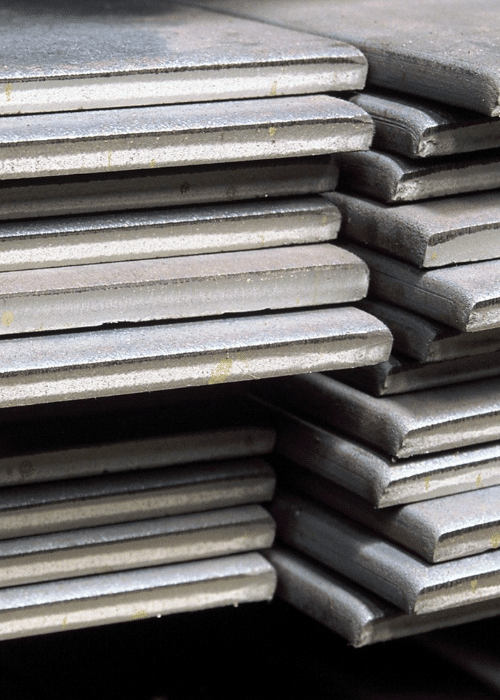
Why Engineers Choose Mild Steel
Low carbon content (under 0.25%) creates a unique metallurgical balance that optimizes formability without sacrificing structural integrity.
Superb Weldability
With low carbon and minimal alloying elements, mild steel allows for high-quality welds without the risk of embrittlement or cracking, compatible with MIG, TIG, and Stick welding.
High Ductility
It can be bent, twisted, and cold-formed into complex shapes without fracturing. This makes it the ideal candidate for automotive body panels and intricate structural components.
High Machinability
Mild steel is "soft" enough to be cut, drilled, and milled with precision. This reduces wear on CNC tooling and speeds up production cycles compared to high-carbon or stainless alloys.
100% Recyclable
As one of the most recycled materials on earth, mild steel can be re-melted and re-purposed indefinitely without losing its structural properties, supporting sustainable engineering.
Industry Applications
From skyscrapers to precision automotive parts, mild steel is the universal choice.

Construction & Structural
- I-Beams, H-Columns, and Channel Sections
- Structural Tubing (MS Square & Round Pipes)
- Fencing, Railings, and Gratings

Automotive & Transport
- Body Panels and Chassis Reinforcements
- Suspension Components and Brackets
- Exhaust Tubing (Cold Rolled Mild Steel)
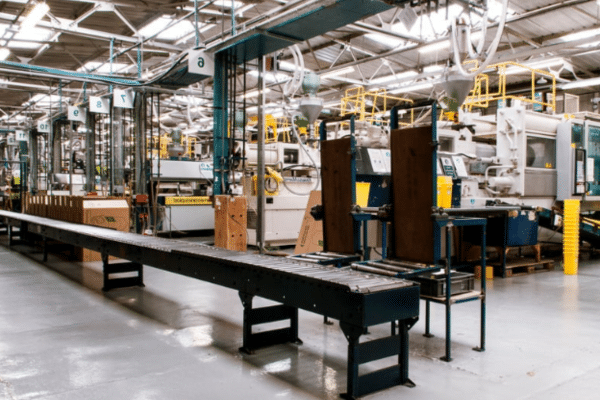
General Fabrication
- Machine Frames and Heavy Bases
- Storage Tanks and Pressure Vessels
- Custom CNC Machined Mounting Plates
Common Engineering Grades
Selecting the right mild steel grade is critical for structural safety and cost-efficiency.
| Grade (ASTM/AISI) | Equivalent (EN/ISO) | Carbon % | Best For |
|---|---|---|---|
| A36 | S235JR | 0.25% - 0.29% | Structural beams, plates, and general construction. |
| 1018 | C15 / C18 | 0.15% - 0.20% | CNC machining, precision parts, and cold-headed components. |
| 1020 | C22 / S20C | 0.18% - 0.23% | Forged parts, axles, and heavy-duty industrial fasteners. |
| A513 | E235 | 0.10% - 0.15% | Mechanical tubing and precision automotive tubular parts. |
Precision Laser Cutting
High-speed fiber laser cutting for carbon steel plates up to 25mm thickness with a tolerance of ±0.1mm.
CNC Machining & Turning
Custom CNC fabrication for mild steel components requiring tight tolerances and complex geometries.
Surface Protection
Since mild steel rusts easily, we offer Hot-Dip Galvanizing, Powder Coating, and Electro-Plating services.
Why It Wins on Value
Comparing Mild Steel against premium alloys to justify your project budget.
The Smart Choice For
- High Volume Projects: Where material cost is a critical factor in ROI.
- Complex Fabrications: Requiring extensive bending, forming, and welding.
- Structural Applications: Indoor frames, warehouse racking, and machine bases.
Consider Alternatives If
- Corrosive Environments: Unless Hot-Dip Galvanizing is applied to the mild steel.
- Extreme Wear: Where high carbon or tool steel is required for hardness.
- Food/Medical Grade: Where non-leaching stainless properties are mandatory.
Technical Insights
Addressing common questions regarding mild steel specifications and fabrication.